
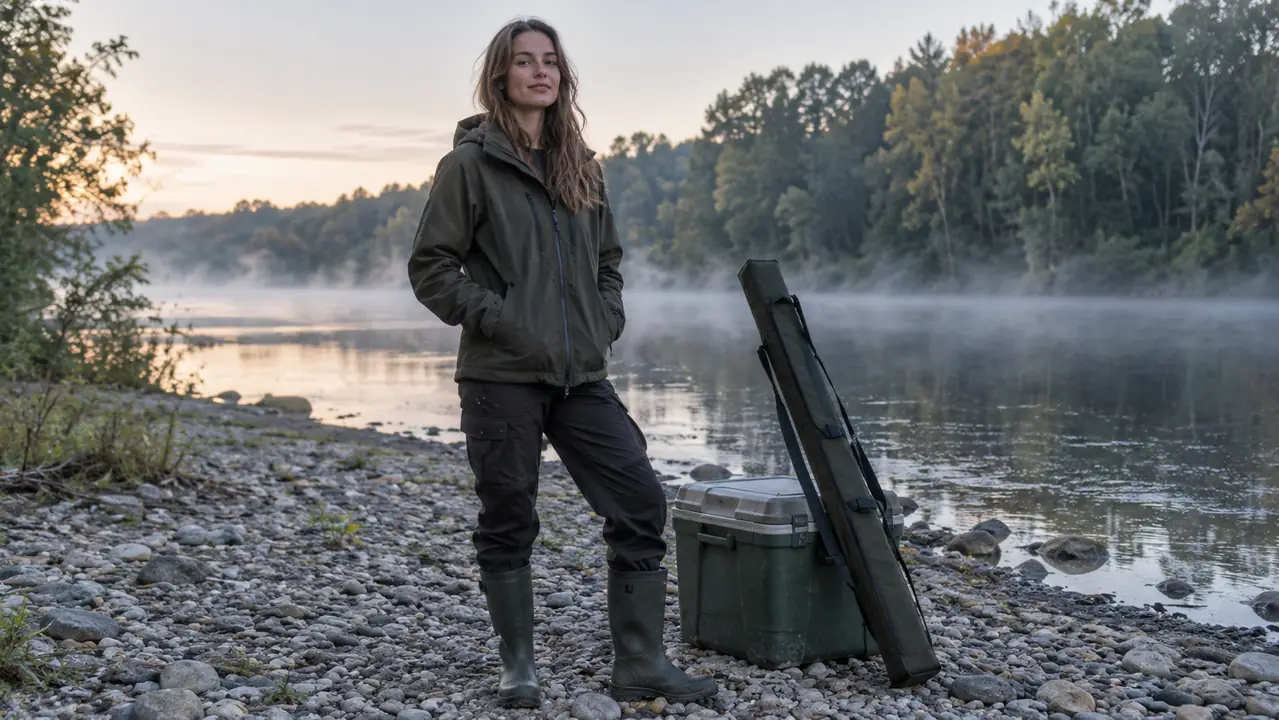
Every spring I do the same arithmetic at the tailgate. The rod that lives in my jon boat is one piece and it does not break down, and the cab of a pickup is not built for a rod that long. For close to 50 years that arithmetic did not matter, because I fished at home on Lake Barkley and the boat ramp was 20 minutes from the house. Then Ray retired, and we started taking road trips, and I found myself standing on public banks in other states with borrowed tackle or nothing at all.
In March 2026 I bought the PLUSINNO telescopic rod and reel combo, mostly because it came in a carrier case and the case would fit behind the truck seat. It was the first telescopic rod I ever owned. I have had it about eight months. It has been on exactly two trips with Ray, the Smoky Mountains in May and the Arkansas Ozarks in August, and it has never been in the boat. Here is what I know about it, without the sales talk.
The Quick Verdict
A packable medium-power rod with a reel that is honest for bank fishing and nothing beyond it. Buy it so you can fish when you travel, not to replace the rod that lives in your boat.
Amazon Check Today's Price →The rod that fits behind the seat is the rod that actually goes with you
The full kit in one carrier case: rod, reel, line, lures, hooks and the terminal accessories, listed at 1.2 pounds. Two road trips in, it has done everything I asked of it from a public bank.
Amazon Check Today's Price on Amazon →How I've Used It
The rod rides in its case behind the seat of the truck. That is the entire reason I bought it. The boat rod is a spinning rod that stays in the boat, and I see no reason to change that arrangement. What travels with the PLUSINNO is one StowAway box, the small one with hooks, weights and terminal tackle, plus whatever lures came in the case.
Both trips had the same shape. Ray drove and I watched the water go by, and we stopped where a public bank was open and legal. I bought a non-resident license in each state before I ever unpacked the rod, and I would tell anybody to do the same before they wet a line. I fished for trout in the Smokies in May and small bass in the Ozarks in August, both on foot from the bank.
That is a narrow use and I want to be plain about it. This rod has not caught me a crappie off a brush pile at Barkley. It has not been in a boat. Nobody has handed it to a kid or dropped it off a tailgate. Eight months of ownership is not the same thing as a lifetime of fishing, so judge what follows for what it is.
What the Rod Itself Is Like
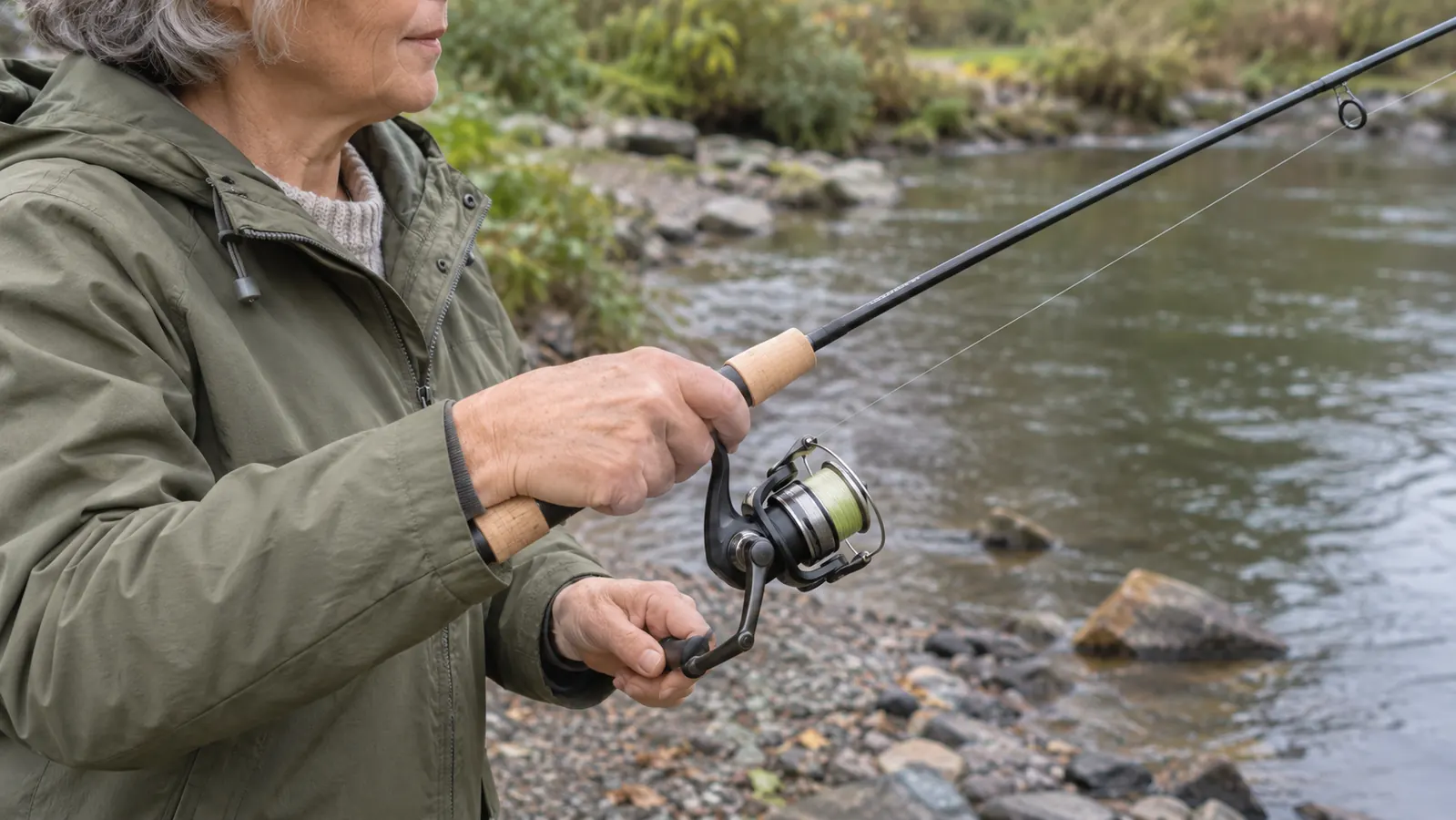
The blank is 24-ton carbon fiber reinforced with fiberglass composite, rated medium power, at 5.91 feet. Set beside the glass rods my father fished, it is lighter and it settles down faster after a cast. What I cannot tell you is how it will look in ten years. I have had it eight months and I am not going to pretend otherwise.
Medium power at just under six feet is a compromise, and it fishes like one. It throws a light lure farther than I expected, and it still has enough backbone to turn a fish that has decided to go somewhere else. On the small Ozarks bass it was more rod than the job required. On the Smokies trout it was about right, and I did not lose a fish to it.
The sections pull out, push back and seat with a twist. I check each joint before the first cast of the day, which is a habit I brought home from 20 years in a taxidermy shop where a loose fitting was a problem you could see. You can feel a joint that is not seated. None of mine has worked loose during a cast, and I have made a few hundred of them by now.
One thing I notice because of the shop: the finish on the blank is even and the wraps at the guides are tight. There is nothing on this rod that looks slapped together, which I did not expect from something that comes apart into sections and ships with a starter tackle set. It has the look of a tool somebody thought about.
The Reel: Enough for a Bank and No More
The reel is an HA 3000 with a 5.2 gear ratio, 11 pounds of maximum drag and 28.9 inches of line picked up per turn of the handle. It carries 12 plus 1 shielded stainless bearings. Those are listing numbers, but they match what my hand tells me: it turns smooth and it cranks a bank fish in without drama.
It came spooled with 10-pound monofilament. Line capacity is listed as 0.20/240, 0.25/200 and 0.30/140 in millimeters and meters, so there is room to go heavier if you want to. I fished the line that came on it for both trips and did not respool. If I were chasing something bigger than bank bass, I would put fresh line on before I left the driveway.
The handle is CNC machine cut and it folds, and it is interchangeable for left or right hand. I crank with my left, it came set that way, and I have never moved it. The honest limit is the 3000 size and the 11 pounds of drag. That is plenty for trout and school bass off a bank. It is not the reel for the fish you tell stories about.
I will say one more thing about it, because the reel is the part people ask about. It came with the rod, it folds down into the case, and it has held up through two trips without a hiccup. It is not the reel I would pick out and buy on its own. It is a reel doing the job it was sold to do, and I have no complaint about that.
What Comes in the Case, and What I Left Home
The kit is a rod, a reel, line, a handful of lures and hooks, and the small accessories that go with them, all in the carrier case. The whole thing is listed at 1.2 pounds. That number sounds like nothing until you have walked a bank trail a half mile in and realized you are not carrying anything worth noticing.
The lures are a starter set and I treated them as one. I caught fish on one of them in Arkansas. I also tied on my own jigs out of the StowAway box, and that is what I would expect anyone with a few years behind them to do. If you buy this thinking the included tackle will be the tackle you would have chosen, you will be disappointed. It is enough to fish the first afternoon.
What I left home was nearly everything else. One small box of hooks and terminal tackle. No crankbait box, no second rod, no net. That was a decision and not a hardship. The whole point of a travel rod is that the kit is one thing you carry, and the minute you pack the boat's worth of tackle you have beaten the purpose.
How It Fished on Two Road Trips
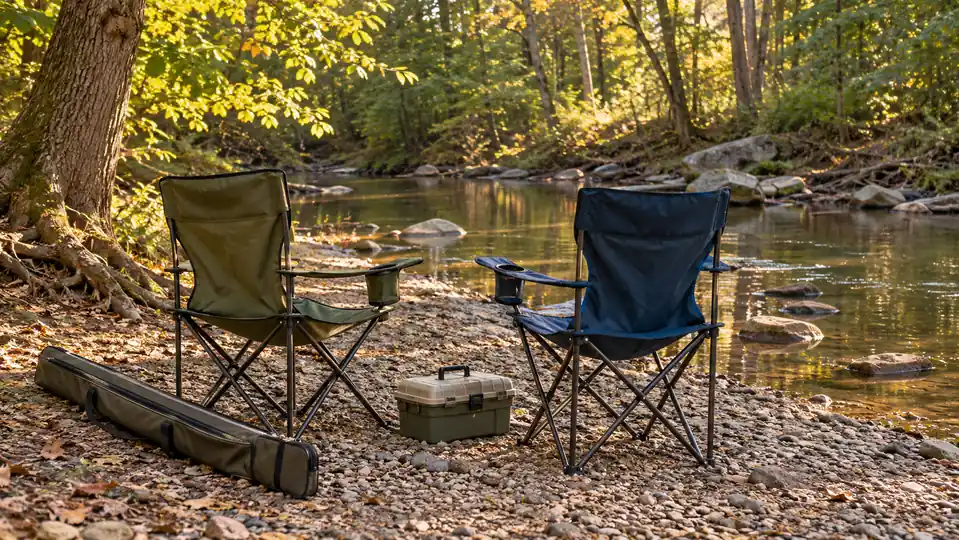
The Smokies in May were fog and cold water and trees at my back. I was casting into slots I could not have reached with a longer rod, and the short length was an asset instead of a limitation. Trout do not need distance. They need a quiet presentation in the right seam, and a rod that comes apart in the middle is quiet enough when it is seated right.
The Ozarks in August were the opposite. Low, clear water, hot, and the fish were farther out. I threw a heavier lure than I had in May and I could reach the seam I wanted from the bank. It was not the reach of a long rod, and I am not going to claim it was.
Twice a day for a week on each trip it came apart and went back together. Nothing stripped, nothing cracked, nothing went out of tune. The friction is time. Breaking a rod down and stowing it in a case is a two-minute job with cold wet hands at the end of a day, and it is two minutes I did not used to spend. I have decided it is worth it, and I understand why some people would rather leave a rod rigged in the truck.
There was one slow morning in the Ozarks where nothing moved for two hours, and I made a mess of a cast into a bush, which is not the rod's fault. I got the lure back and kept fishing. That is the whole trouble report: a snagged cast and a tangle in the line that I picked out sitting in the shade.
Where It Falls Short
A medium power rod at 5.91 feet will not cast as far as a longer rod and it will not handle big water. If your travel fishing means standing on a jetty or working a wide reservoir, this is not the tool. It is a bank rod, a creek rod, a small water rod, and it is good at that.
The reel is the other limit. Eleven pounds of drag and a 3000 spool is fine for what I did and thin for anything with weight to it. If you already own a better reel, the combo still makes sense, because the rod is the part you cannot substitute. Swap the reel and keep the rod in the case.
The last caution is maintenance. Telescopic joints collect grit, and a joint with sand in it will not seat right. I take the sections down clean and dry, wipe them, and put it away that way. I have not had a joint jam and I intend to keep it that way. A one-piece rod does not ask that of you.
And it is not the rod I would hand a kid learning to cast, mostly because of the joints. A new caster will not check them and will not clean them, and will jam one. If you are teaching somebody, hand them a one-piece and let them learn on something that forgives.
What I Liked
- Fits behind a truck seat in its case, with the whole kit listed at 1.2 pounds
- 24-ton carbon fiber and fiberglass composite blank, medium power, 5.91 feet
- Reel turns smooth with 12 plus 1 shielded bearings and a 5.2 gear ratio
- Handle folds and swaps for left or right hand
- Fished honestly from public banks on two trips with no failures
Where It Falls Short
- The included lures are starter grade and I replaced most of them
- 11 pounds of drag and a 3000 spool cap what the reel can handle
- Short medium-power rod gives up distance on big water
- Telescopic joints need cleaning and checking that a one-piece rod never asks for
Medium power at just under six feet is a compromise, and it fishes like one. That is not a complaint. It is the reason the thing fits behind a seat.
Who This Is For
This is for the person who fishes at home and wants to fish when they travel. If you already own tackle and the only thing stopping you is that your rod will not fit in the cab, this kit solves that and asks little of you. It is also decent for somebody starting from nothing, because everything you need is in one case including line, and you can be fishing an hour after you open the box.
It suits bank fishing, small creeks, stocked ponds and water you can walk to. It suits a rented cabin, a public access and a couple of afternoons. Ray does not fish and never has, and even he commented that the case was smaller than he expected, which from him is high praise.
I would also put it in front of anyone who has looked at a two-piece rod and thought about it and stalled. Two pieces is still a rod you have to plan around. This one folds into a case you can put behind a seat and forget about until the water shows up, and that is a different level of convenient.
Who Should Skip It
Skip it if your fishing happens out of a boat. My spinning rod lives in the jon boat and I have never once wanted to bring the PLUSINNO instead. A one-piece rod is stronger, casts better and has no joints to check, and if it already fits where you fish, there is nothing here you need.
Skip it if you want one rod to do everything, or if the fish you chase run bigger than bank bass and trout. Eleven pounds of drag is the number to remember. And skip it if you will not clean it. A telescopic rod left dirty in a case is a rod that will let you down eventually, and that is on the owner and not on the rod.
It goes behind the seat and it comes out when the water shows up
Rod, reel, line, lures and hooks in one carrier case. Listed at 1.2 pounds, 5.91 feet, medium power, spooled with 10-pound monofilament. Mine has been to Tennessee and Arkansas, and it is going again.
Amazon Check Today's Price on Amazon →