
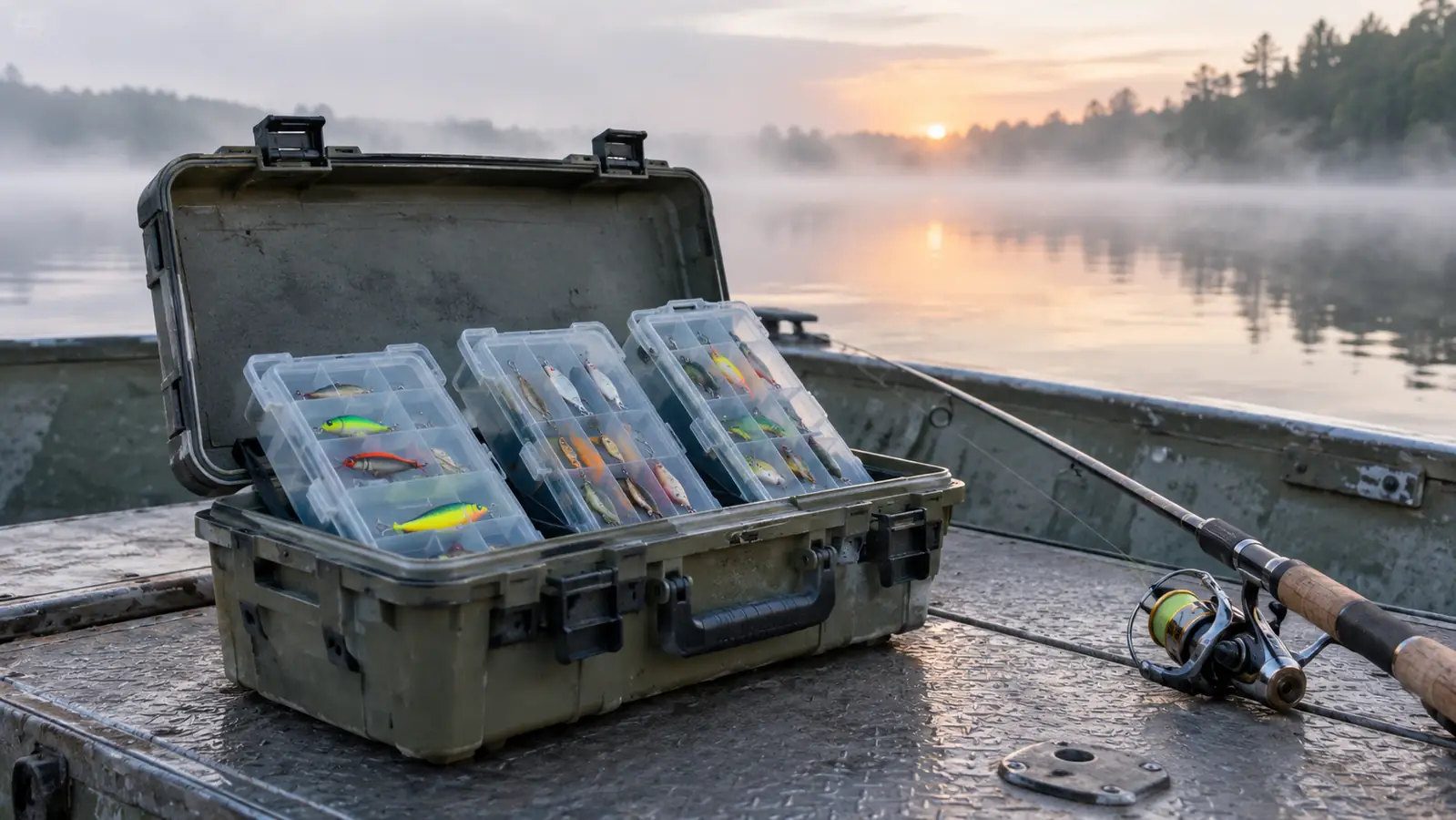
Two and a half years ago I got tired of digging. My dad's old metal box sat on a shelf in the garage with forty-odd jigs and a sack of plastics loose inside it, and every trip out of the public ramp on Lake Barkley started with ten minutes of untangling before I ever backed the trailer down. In April 2024 I bought the Plano Angled Tackle System with the three StowAway boxes, and the digging stopped that first weekend. It has ridden in the jon boat on every trip since. I have never owned a soft tackle bag. What I know about them is what I have watched at the ramp and what I have handled while standing there talking to the man who owns one. That is enough to tell you which one does which job, and they do not do the same job.
Short answer: if your tackle lives in boxes and rides in the same boat every trip, buy the Plano. If your tackle lives behind the truck seat and you walk a bank before you ever launch, a soft bag will serve you better.
The Plano is a hard case, 18 inches long, 9.5 inches wide and 11 inches tall, 5.7 pounds empty, with three StowAway boxes inside and no wheels. The main compartment holds those boxes at a 15 degree angle so the tops tip up toward your hand, and the DuraView covers and doors let you read a box without opening it. The whole point of the thing is fewer decisions and less digging.
A soft bag is fabric, zippers and pockets. It weighs close to nothing, it lies against your hip on a long walk, and it swallows whatever you can push through the opening, including things a hard case was never shaped to hold. It also crushes, and it stands up on its own about as well as a duffel does. Neither one is the better product. They are built for two different mornings.
| Plano Angled Tackle System | Soft tackle bag | |
|---|---|---|
| Shell | Hard shell, so a cooler set on top of it in the truck bed does not crush a box | Fabric sides, so weight piled on top squashes whatever is under it |
| Boxes included | Comes with three StowAway boxes | Sold empty, so the boxes are a separate purchase bought one at a time |
| Reading a box | DuraView covers and doors, you see the contents through the lid | Solid fabric, you unzip and dig to find out what you have |
| Terminal tackle | One whole box for hooks, weights and swivels, kept away from the jigs | Small items end up sharing one side pocket with the pliers |
| Weight empty | 5.7 pounds before you put a thing in it | A few ounces of fabric |
| Walking in to a bank | 18 by 9.5 by 11 and hard sided, it wants a flat place to sit and it finds your knee | Throws over a shoulder and softens against your side |
| Bulky or odd shapes | Compartments sized for boxes, so a line spool or a jacket rides loose on top | The main bag stretches around a spool, a rain jacket or a sandwich |
| Wheels | None | Most have none either |
| Best for | One boat, one garage shelf, tackle that lives in boxes | Several vehicles, bank walking, gear that changes with the season |
Where the Plano Wins
The first thing it did was separate three kinds of fishing that had been sharing one box. Crappie jigs in one StowAway, bass soft plastics and crankbaits in the second, hooks, weights and terminal tackle in the third. I did that the first weekend and I have not mixed them since. If you have ever cut a hook out of a jig box in the dark with a headlamp held in your teeth, you know what that separation is worth on a cold morning.
The second thing is the angle. The boxes sit tilted in the main compartment, tops tipped up toward the lid, so when I open the case on the deck I am looking down into three boxes instead of at three closed lids. The DuraView covers and doors mean I can often read a box and leave it shut. That sounds small until you count it. I bet I decide not to open something thirty times in a morning now, and every one of those is a minute I did not spend digging.
The terminal box is the one I underrated. Before, hooks and weights and swivels lived in a coffee can, and a coffee can in a moving boat is a rattle and then a pile. Now the third StowAway holds all of it. The first week of March 2025 I tied on a drop shot rig in the dark with the trolling motor idling, and I never turned on the headlamp, because I knew that box by feel. I could not have done it with the old metal box. The utility pocket catches the rest of it: a spare snap, a short length of leader, a scrap of sandpaper.
The hard shell earns its keep more in the garage than on the water. Mine sits on a shelf next to a coil of line and a coffee can of screws, and things get set on top of it. A hard case does not care. It also does not take a shape of its own when it is half full, so hooks stay in the box instead of settling into a low corner of fabric where you find them with your thumb.
And it does not walk around in the boat. The jon boat is 14 feet with a small electric trolling motor and there is no console to brace anything against. A hard case with some weight to it stays where I set it. The 5.7 pounds that is a nuisance on a long carry is a favor on a deck that is rocking.
Where a Soft Bag Wins
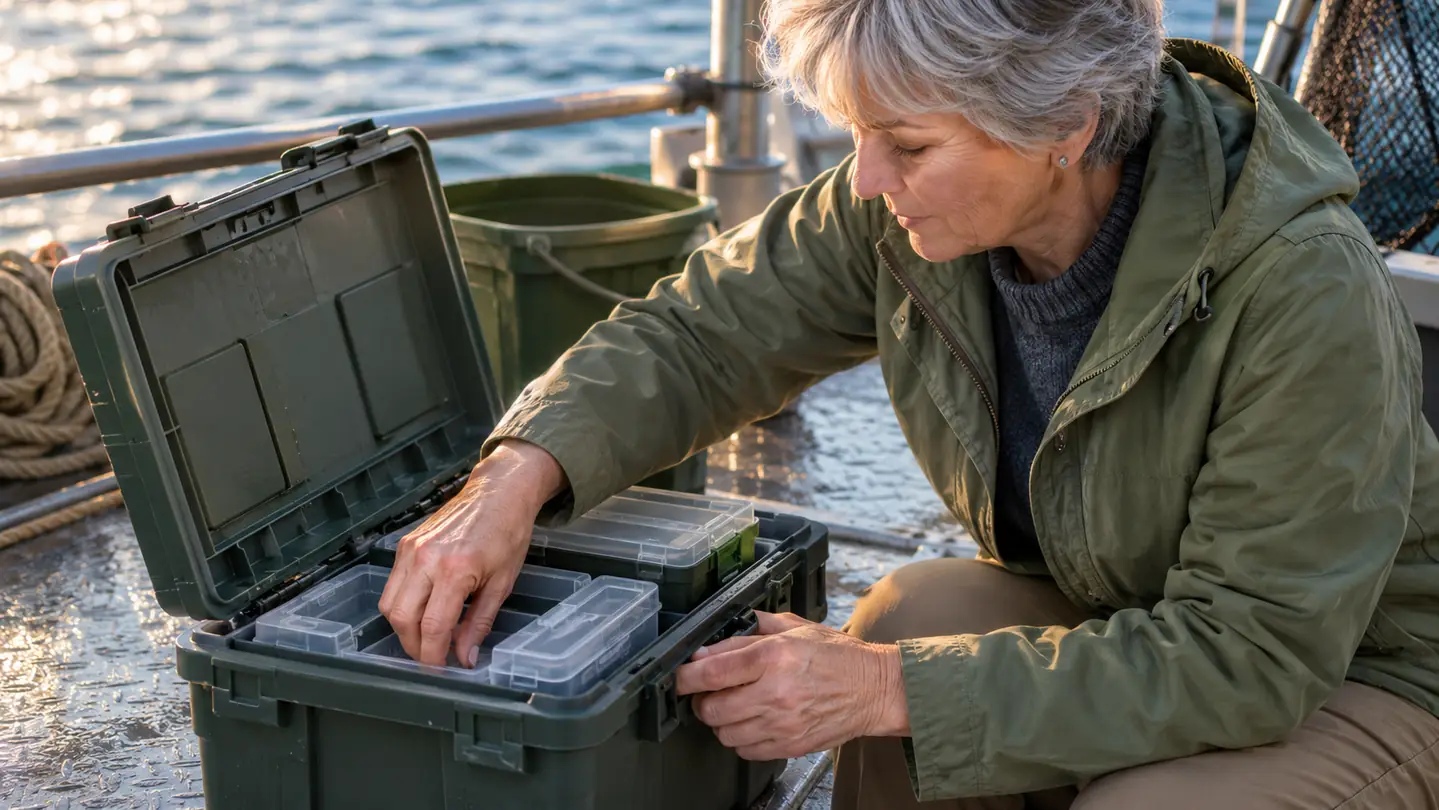
Now the other side, and I will be plain about it. I do not walk far with my tackle. I park at the ramp, I set the case in the boat, and I go. If I were walking a quarter mile of bank with a rod in one hand, the Plano would be the wrong thing to carry. It is 18 inches long and hard sided, and after a while it finds the outside of your knee and stays there.
There is a man who launches out of the same ramp as me, been at it longer than I have, and he carries a soft bag on a strap across his chest. I stood with him in the parking lot in October while he pulled out three boxes of his own, all of them sitting in that bag's main compartment, and then a rain jacket, a spool of line and a thermos. He was on the water in four minutes. I will not pretend that did not look easy. If I fished out of somebody else's boat and had no shelf to set a hard case on, I would look at his setup twice.
A soft bag goes over a shoulder and stays put. It gives when you set it down. It slides under the truck seat. Ray and I took two road trips this year, the Smoky Mountains in May and the Ozarks in August, and the only tackle that went with us was one StowAway box inside a duffel. That is not the same as a soft bag, but it taught me the same lesson. On a day when the fishing is a side errand, the hard case stays home.
Soft bags also hold what hard cases are not shaped for. A spool of line. A rain jacket. A sandwich. A pair of pliers that fits no compartment ever made. My Plano is sized for three StowAway boxes and a utility pocket, and when I want to bring something that is not a box, it rides loose on top and slides around while I run the motor.
And they change with you. If you fish for whatever is biting and your tackle changes every month, a bag takes a new shape without you buying anything. The Plano does not take a new shape. It holds three boxes and it holds them very well, and if your three boxes are the wrong three boxes, you will feel it every trip.
Crappie jigs in one box, bass plastics and crankbaits in the second, hooks and weights in the third. I set it up the first weekend and I have not mixed them since.
What Two and a Half Years Did to It
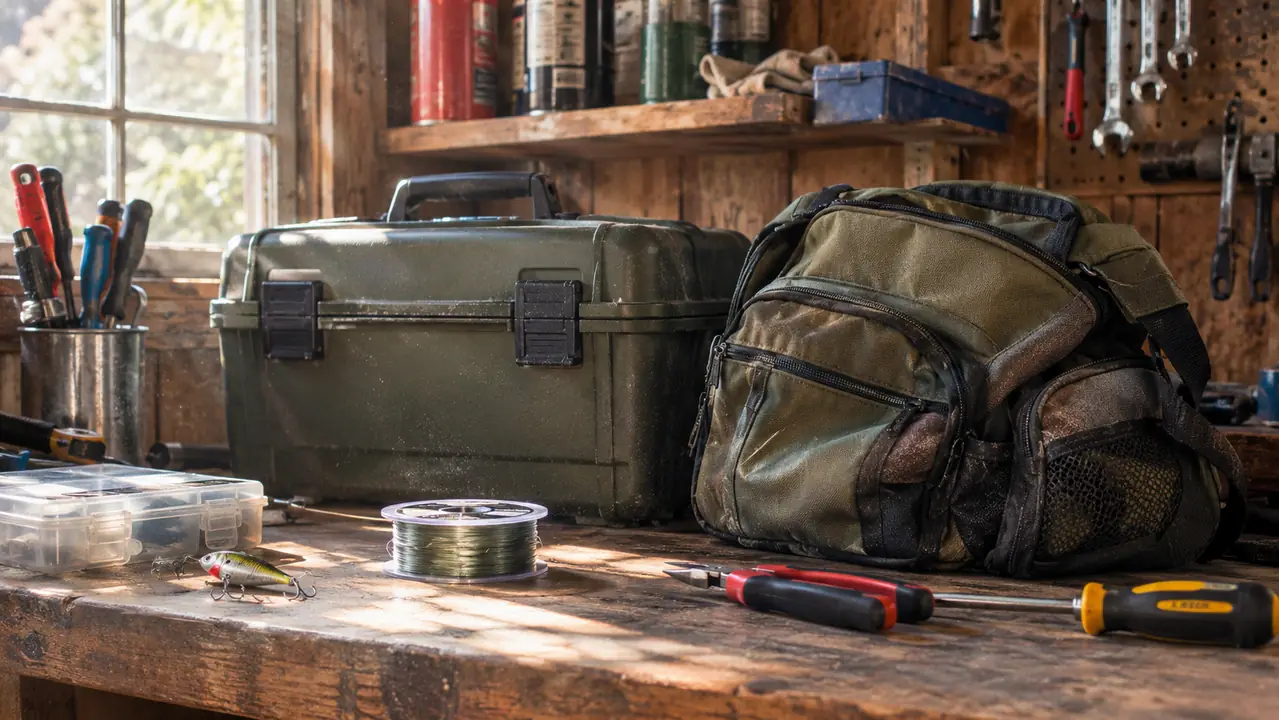
It has been in the jon boat, in the truck bed, on a garage shelf, and out in the rain twice when I got caught on the water. Two and a half years on, the shell is scuffed at the corners where it slides under the boat seat, and the covers still sit flush. Nothing has cracked. The three StowAway boxes are the ones that came with it in 2024. The crappie box, which is the one I open most, still closes as tight as it did the first week. I have not lost a box, cracked a cover, or had a hook come loose in a compartment and find me later.
Both soakings happened out in the open with no cover in reach, and I did what I always do. Wiped it down with a rag in the garage and left the lids open overnight to dry. No rust on the hinges that I can find, no swelling, no smell. It lives on that shelf from November through February, and every spring I open it expecting trouble and find the boxes the way I left them in the fall. That is the whole of the care routine. I have never oiled a thing on it or tightened a screw.
What I do not like about it has not changed either. It is 5.7 pounds empty and more than that full, and it has no wheels. Carrying it from the truck to the ramp is nothing. Carrying it a quarter mile would be a chore, and I do not do that, which is the honest reason this case suits me. If you walk in to your spots, count the weight against it before you buy.
And here is the part no listing tells you. An organizer only organizes what you put back. The first month, I would pull four jigs out and lay them on the deck, and by dark they were in my shirt pocket and in the bottom of the boat. It took me about six weeks to build the habit of dropping a jig back in the box before I tied on the next one. The case did not do that for me. It just made it easy enough that I finally did it.
What I Liked
- Three StowAway boxes included and easily split by species or by job
- The boxes sit at a 15 degree angle with the tops tipped up toward your hand
- DuraView covers and doors mean you can read a box and leave it shut
- Hard shell takes weight piled on top of it in the truck and on the garage shelf
- 18 by 9.5 by 11 with real weight to it, so it stays where you set it on a small boat deck
- Utility pocket catches the odds and ends that fit no box
Where It Falls Short
- 5.7 pounds empty, and no wheels
- Sized for boxes, so bulky items ride loose on top
- A chore to carry any real distance at 18 inches long and hard sided
- Only works if you put things back where they came from
Three boxes, three jobs, and no more digging in the dark
A hard shell, three StowAway boxes tipped up at 15 degrees, and DuraView covers you can read through before you decide to open anything. This is the case that has ridden in my jon boat since April 2024. Sort the boxes one time and be done with it.
Amazon Check Today's Price on Amazon →Who Should Buy Which
Buy the Plano if your tackle lives in one place and one boat. You launch at the same ramp, you fish the same water, and your gear goes from a garage shelf to a deck and back. That is my situation, and I would buy it again tomorrow. Sort the boxes the first weekend, one job per box, and do not overthink which jig goes where. You will remember, and if you do not, you will learn by the second trip.
Buy a soft bag if your tackle lives in the truck. If you fish three different places in a month, if you walk a bank, if you haul pliers and a jacket and a spool of line and a sandwich down to the water, the bag will fit your day better than a hard case will. Get one with a strap you trust on your shoulder, and put boxes inside it. A soft bag with loose hooks rolling around in the bottom is worse than no bag at all.
Either way, sort it before the season, not during it. I set my three boxes up on a Sunday afternoon in April with the boat backed to the garage door and a trash can between my feet, and I have not had a bad morning searching since. If you wait to decide where the crankbaits go until you are on the water, you will be deciding in the wind with a rod in your hand, and you will get it wrong.
And if you are like half the people at that ramp, you will end up with both. A hard case for the boat and a bag for the truck is not a foolish way to spend. That is what the man parked next to me on the last trip of the year was doing, and he had been at it longer than I have.
If your tackle lives in one boat, this is the case that earns the shelf space
18 by 9.5 by 11 inches, hard shell, three StowAway boxes inside and a main compartment that presents them at an angle so you can reach in and pinch one jig out. Mine has been loaded first every trip for two and a half years.
Amazon See the Plano Angled Tackle System on Amazon →