
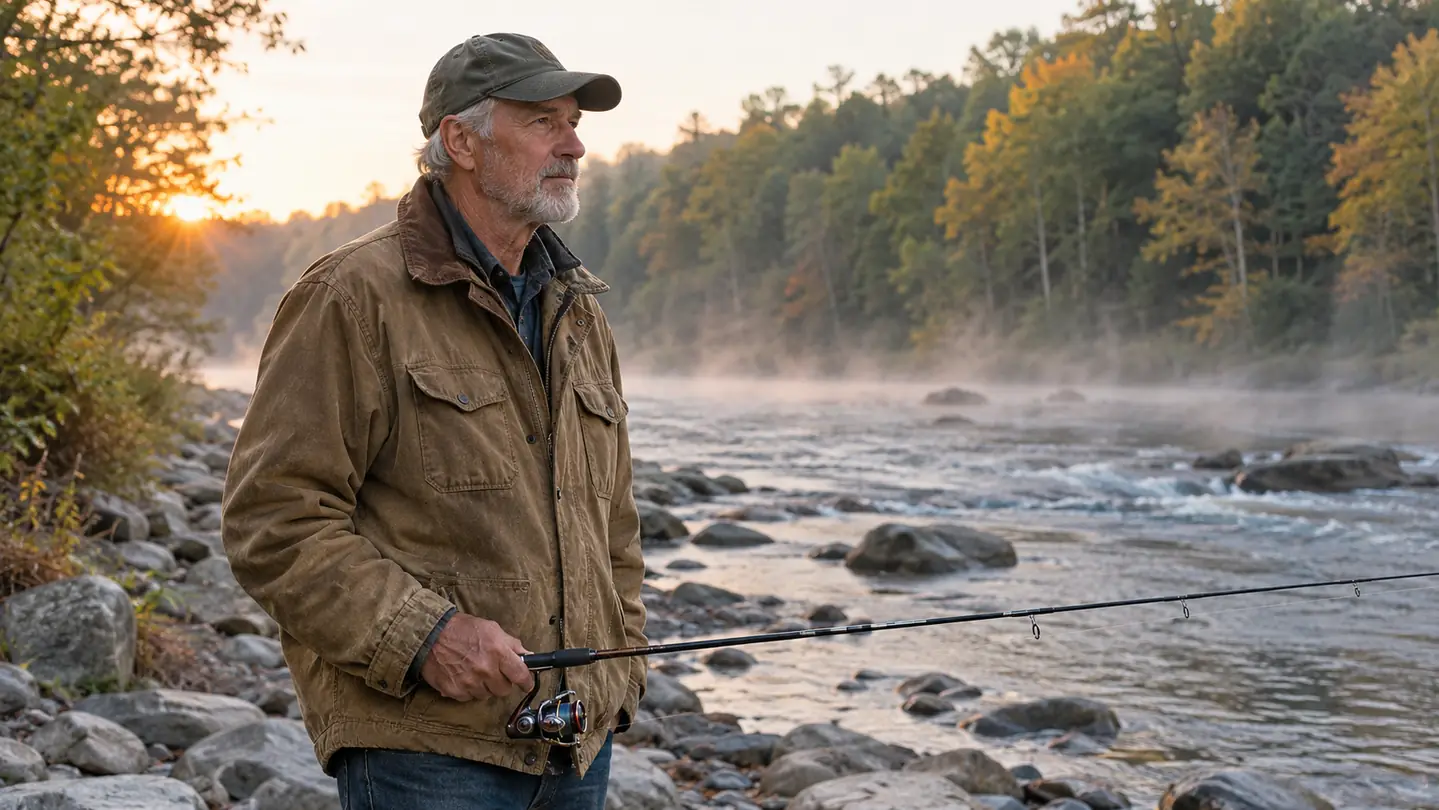
I bought the PLUSINNO telescopic rod and reel combo in March 2026 for a reason that has nothing to do with fishing. My spinning rod lives in the jon boat from April to November and it has never once come inside the house. When Ray and I started taking road trips, I wanted to fish on those trips, and I could not get that boat rod into the truck cab without laying it across the seat where it would get sat on. So I went looking for something that folded up small. The PLUSINNO is what I came home with.
That was eight months ago. It has gone on two trips, the Smoky Mountains in May and the Arkansas Ozarks in August, and it has caught fish on both. It is also the only rod I have owned that made me stop and think about how to use it. That is not quite a complaint. It is the trade you make, and I would rather lay out the trade here than have you find out on a public bank somewhere wondering why the rod in your hand feels like a different animal than the one in the picture.
The Quick Verdict
A packable rod that earns its place behind a truck seat. Not the rod you reach for when the boat is already in the water.
Amazon Check Today's Price →The rod that lives in the truck instead of leaning in the garage
Eight months behind the seat, two road trips, fish on both. If that is the job you need a rod to do, this one does it.
Amazon Check Today's Price on Amazon →What Nobody Tells You: It Is a Travel Rod, Not a Boat Rod
Telescopic rods get sold as rods. They are not, really. They are a packing solution that happens to cast. Every one of them gives something up where the sections slide into each other, and you feel it the first time you load the rod on a cast. There is a hinge in the middle of the blank that a one-piece rod does not have. I noticed it on the first cast in May. By the second morning I had stopped noticing, which is the honest way to describe most of it.
Here is what telescoping actually buys you. The rod comes apart into a carrier case that fits behind a truck seat, and that case stays there. That is the entire value. If you fish from a boat you already own, you do not need this. If you fish from the bank on trips, or out of a rental car, or off a pier three states from home, then a rod that folds is the difference between fishing and not fishing, and there is no fancier rod in the world that fixes that.
My boat rod is a heavier thing with a handle that has gone smooth in places, and it is the better rod. It is also two states away from being useful when I am standing on a bank in Tennessee. The comparison I keep coming back to is a folding knife against a fixed blade. The fixed blade is stronger. The folding one is the one in your pocket when you need it.
How I've Used It
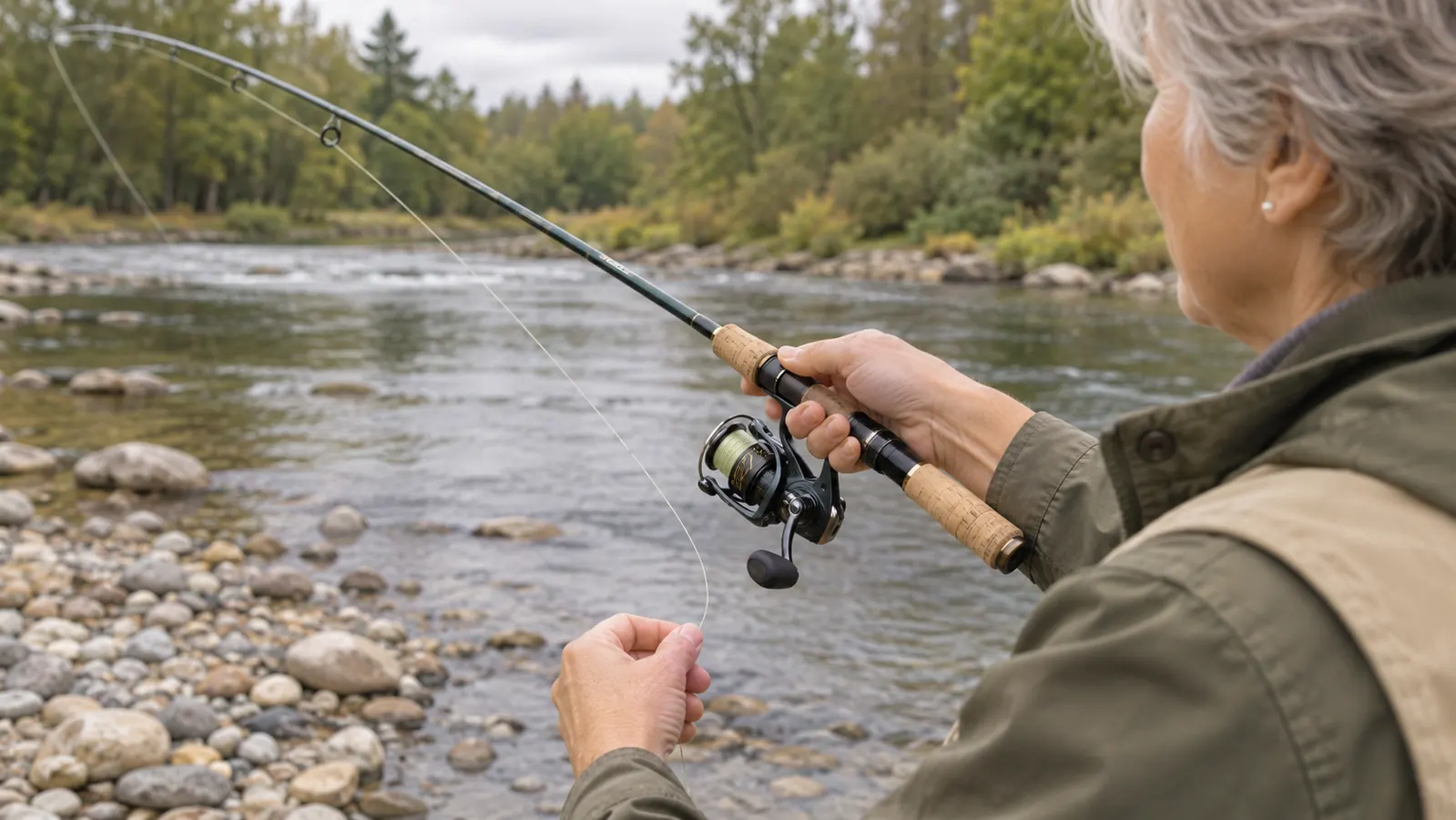
Both trips followed the same shape. We drove, we stayed in a motel, and I bought a non-resident license for the days we were there. In the Smokies in May I fished small trout in the clear water off the road, standing on rock and casting up into the pools. In the Ozarks in August it was bass and heat, and I fished from public banks where the water was low and the fish were sitting in the shade lines. Neither trip was a guided float. It was me, a ball cap, and a rod that came out of a case.
The rod handled both. Trout are not a test of anything except delicacy, and the tip is soft enough not to tear a small hook out of a soft mouth. The bass were not big, mostly fish that would fit in two hands, and the rod cast a small crankbait far enough to reach the shade line without me having to lean into it. I never hooked anything that made me worry about the rod. I also never hooked anything that would have tested it.
One thing worth knowing up front. The reel handle swaps from left to right, and I had it on the wrong side for the first hour in May because I did not check it before I left the truck. That is on me, not on PLUSINNO. But if you have only ever cranked with one hand, sit in the driveway and swap it before you get to the water, because doing it on a bank with a cold wind coming up the river is a worse version of the same five minutes.
It is not the better rod. It is the rod that was in the truck when the better rod was two states away.
What the Carbon Fiber Buys You
The blank is listed as 24-ton carbon fiber reinforced with a fiberglass composite, and I have no way to verify tonnage from my driveway. What I can tell you is that the rod is light in the hand and does not feel like the fiberglass telescopic rods I handled in the store before I bought this one. Those felt like a stick with a bend in it. This one has some snap at the top and enough backbone in the lower half to set a hook on a fish that is not cooperating.
It is 5.91 feet, which is short by boat standards and about right for a bank where there is brush behind you and you are casting under a limb. Medium power, rated for 10-pound line. That combination leans toward castability and away from winching a fish out of cover. If you are pitching into heavy pads after a fish with shoulders, this is not that rod, and careful casting does not change it.
The whole package is listed at 1.2 pounds, rod, reel and line together. With the reel mounted it balances near the front of the grip, which is where I want it, and it does not go tip heavy after an hour of casting. That surprised me. Light rods usually feel light because everything is light, including the parts that should not be.
The Reel, and Where a Combo Stops Being a Combo
The reel is the HA 3000. Twelve plus one shielded stainless bearings, a 5.2 gear ratio, 11 pounds of maximum drag, and 28.9 inches of line picked up per turn of the handle. Those are the listing's numbers and they match what the reel feels like in use. It turns smooth, it picks up line fast enough to keep a small fish from turning its head, and it is not built for water where the fish run longer than your arm.
The handle is machine cut and it folds down, which matters more than it sounds like it should. A folding handle is the difference between the rod going into its case and the rod going into its case with the handle poking out at an angle. It also swaps to the other side, so a left-handed caster and a right-handed caster can use the same reel without arguing about it.
Line capacity is generous for this size reel: 240 meters of 0.20 mm, 200 of 0.25, and 140 of 0.30. It came spooled with monofilament and I fished that line on both trips rather than stripping it off. Monofilament is forgiving on a rod with joints in it. I would rather have a little stretch on a telescopic rod than a line that sends every bit of grit straight up into my hand.
What I would not do is treat it as a reel you can service. There is no scheme where you open it on the kitchen table and repack it yourself. When it starts to feel rough, and it will eventually, you either live with it or replace it. That is the part of any combo nobody says out loud. You are buying a rod, and the reel is the thing they threw in so you could fish the day it arrived.
Where It Falls Short
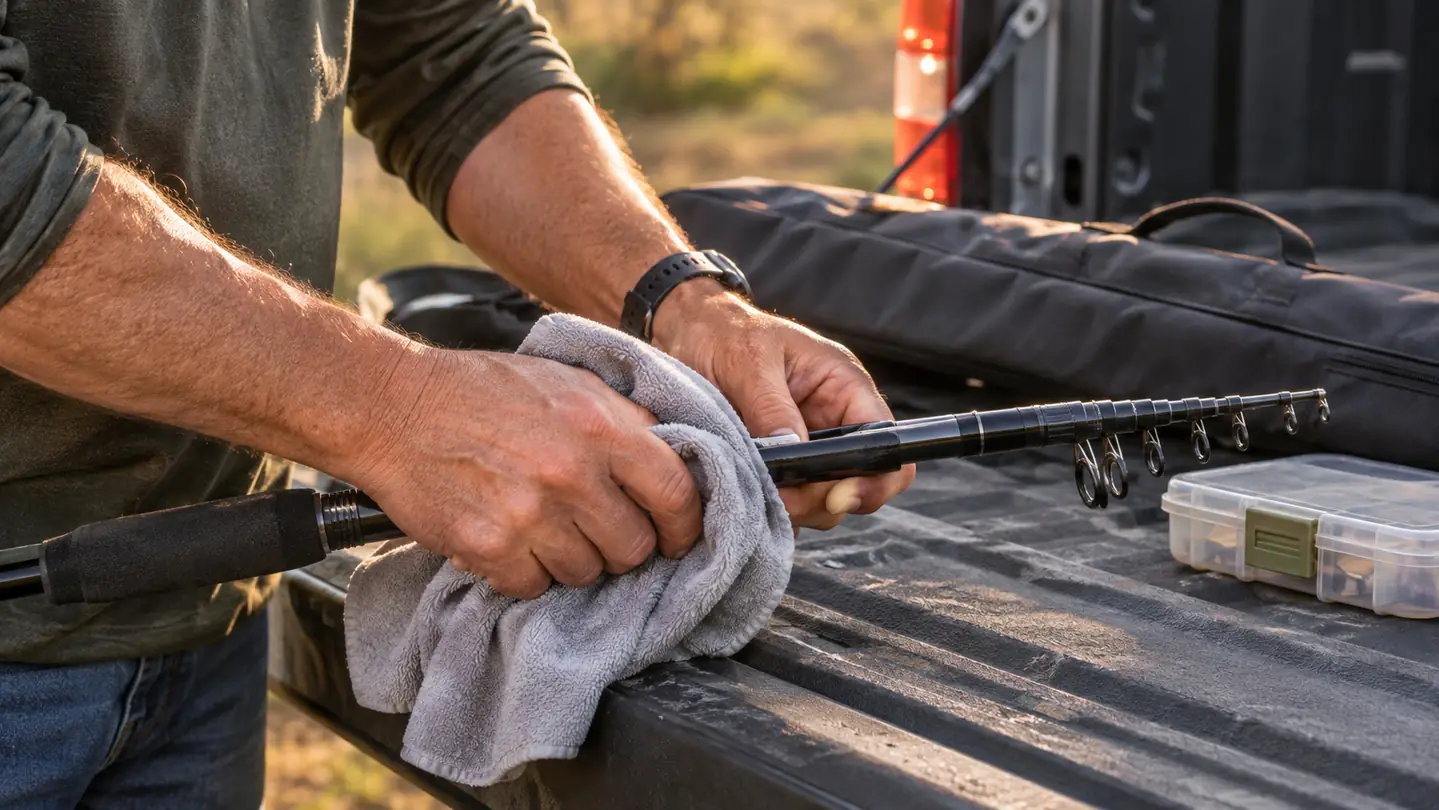
Grit is the enemy. The sections slide on each other, and sand, mud or bank dirt that gets between them will find its way in and stay. Fish a gravel bar, lay the rod down, pick it up, collapse it, and you have just introduced a season of wear in an afternoon. I wipe the sections and let them dry before I collapse the rod, every time, and I still check the joints before I put it away.
Collapsing it is a two-hand job. You cannot do it with a fish in one hand and the rod in the other, and you cannot do it in a hurry without pinching something. The first time I broke it down on a tailgate in the Ozarks it took me four tries to get the sections seated the way the case wanted them. By the second trip it was closer to thirty seconds. Expect the thirty seconds, not the four tries.
The rod is medium power and rated for 10-pound line, and I would not push past that. It will land a two-pound bass all day long. It will not land a fish that decides to go under a log. The joints are where a rod like this fails, and I have not had one fail, but I also have not given one a reason to.
The included lures and hooks are what they are. I used the hooks and a couple of the lures on the first trip and they caught fish, and I have not opened that pouch since. I carry the terminal tackle box from my Plano setup and my own lures, because I know where everything is in that box. Treat the kit contents as a way to fish the day the box arrives, not as a tackle box you are going to keep.
What I Liked
- Folds into a carrier case that fits behind a truck seat, which is the whole reason to own it
- 5.91 feet and 1.2 pounds, light enough to cast all morning without thinking about it
- Reel handle folds down and swaps to either side
- 11 pounds of drag, a 5.2 ratio and 28.9 inches per turn are honest numbers for a combo reel
- It caught fish on both trips and nothing loosened up or failed
Where It Falls Short
- You feel the sections load; it is not a one-piece blank and never will be
- Grit between the sections is real maintenance work, not a suggestion
- Collapsing takes two hands and some patience
- Medium power and 10-pound line is a ceiling, not a starting point
- The included lures and hooks are starter gear you will outgrow in a season
If You Buy One, Do This First
Before your first trip, take it out of the case in the driveway and put it together and take it apart three times. Learn where each section seats and how much pressure it takes. Do it in daylight with nothing tied on. The bank of a river at dusk is a bad classroom for a new rod.
Second, wipe the sections down and let them dry before you collapse it. Every time, not most times. A rod that goes into the case wet comes out of the case with a smell and a dull spot that does not come off with a rag later.
Third, decide now what line you are going to fish. The spooled monofilament is fine and I fished it for both trips. If you change it, spool it with 10-pound, because that is what the rod is rated for and the drag is set up to work with line in that range.
Who This Is For
You are the person this is for if the rod you own does not fit where you are going. Road trips. A truck with no room behind the seat. A rental car. A cabin you drive to once a year. You want to fish two or three mornings on a trip and you are not going to rig a carrier on the roof to make it happen. You fish from banks, piers and the sides of roads where the water looks right.
It also suits somebody new enough that a combo makes sense. Rod, reel, line, hooks and a few lures in one box with a case. If you are buying your first rod in twenty years and you are not sure you will keep at it, this is a low risk way to find out whether you still like standing in cold water.
Who Should Skip It
Skip it if your fishing happens out of a boat you already own. My spinning rod does everything better and it was already paid for. A telescopic rod in a boat is a rod with extra joints and no extra benefit, and you will feel every one of those joints on a day when the fish are big.
Skip it if you are chasing big fish. Medium power, 10-pound line, and joints in the middle of the blank are three reasons not to. Skip it if you want one rod that does everything, because this one does a single thing well and that thing is not the thing most people mean when they say they need a rod.
And skip it if you are not going to maintain it. A telescopic rod that gets put away wet and gritty is a rod that will quit inside a season. That is not the rod's fault, but it is the rod's design, and you should know it before you buy rather than after.
If the rod has to travel, this is the one that travels
Eight months behind a truck seat, two road trips, joints still tight, fish on both. Check today's price and see whether it fits the trip you already have planned.
Amazon Check Today's Price on Amazon →