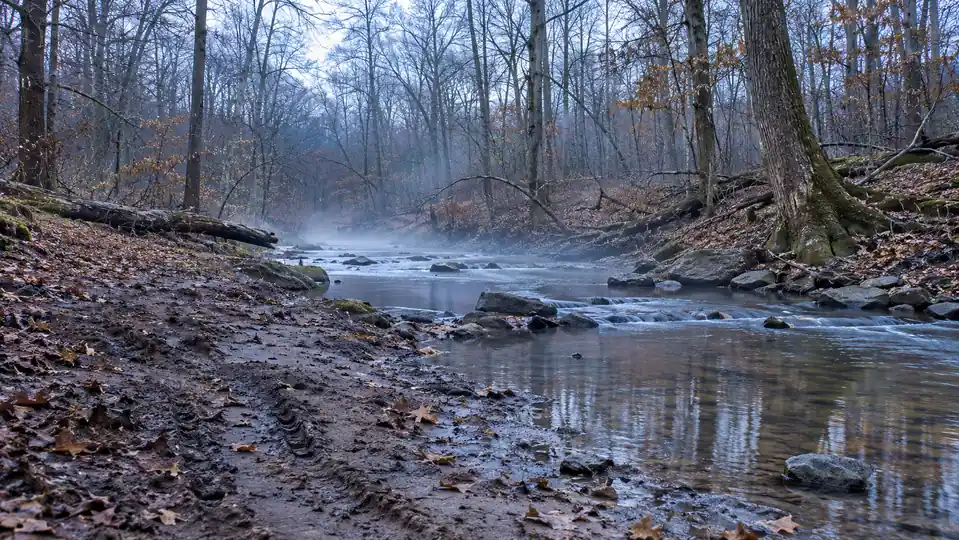
Guessing is what I did for years on the back forty. I would walk it in February, find tracks in the creek bottom, find rubs on the young maples, and build an entire season out of what I had decided those things meant. Then I would sit the ladder stand through November and see less than I had promised myself. In August of 2025 I bought a WOSPORTS mini trail camera, strapped it to a white oak where the deer trail crosses the creek, and started walking out every two weeks to pull the card. One camera, one tree, a little over a year now. It did not make me a better hunter. It made me a better informed one, which is not the same thing and is worth more.
Here is what that camera actually gave me, in plain terms. Ten things I know now that I was only guessing at before. Some of them changed how I hunt. A couple of them just saved me from wasting good mornings. And there are things the WOSPORTS camera does not do, which I will get to at the end, because a piece of gear that gets praised for everything is not being described honestly.
One camera, one tree, and a card you pull every two weeks
This is the whole method. You do not need a subscription, a signal, or a lease full of cameras. You need one tree the deer already use and the patience to walk out and look.
Amazon Check Today's Price on Amazon →You learn the deer use that crossing at two in the morning, not at first light
The first card I pulled, back in August 2025, was almost all night. Does at 1:40. Does again at 2:15. A fork horn at 3:05. I had been sitting that stand assuming the movement came in the last hour of daylight, because the last hour of daylight is when I had happened to see deer there. I was wrong about the hour and had been wrong about it for years. Knowing an animal uses a trail and knowing when it uses a trail are two different pieces of information, and only one of them tells you when to be in the stand.
Thirty-megapixel photos let you count points without walking in on him
A camera does the looking so you do not have to. That eight point buck came through the crossing in October 2025, at night, several times. Thirty megapixels is enough to zoom into the frame and count his points and see the shape of his rack without ever putting my scent down in that bottom. That matters more than people admit. Every trip in for a closer look is a trip that teaches a mature buck something, and you only get so many of those before he stops being there.
Two weeks of pictures beats a season of theories
I pull the card about every two weeks, which gives me a strip of time rather than a single moment. I can see which does were regulars, which days were blanks, and when a new set of tracks first showed up on camera. One picture is an anecdote. Two weeks of pictures is a pattern, and a pattern is the only thing you can actually plan a season around. My February theories never survived contact with two weeks of August pictures.
It runs on batteries and an SD card, so the back forty needs no signal
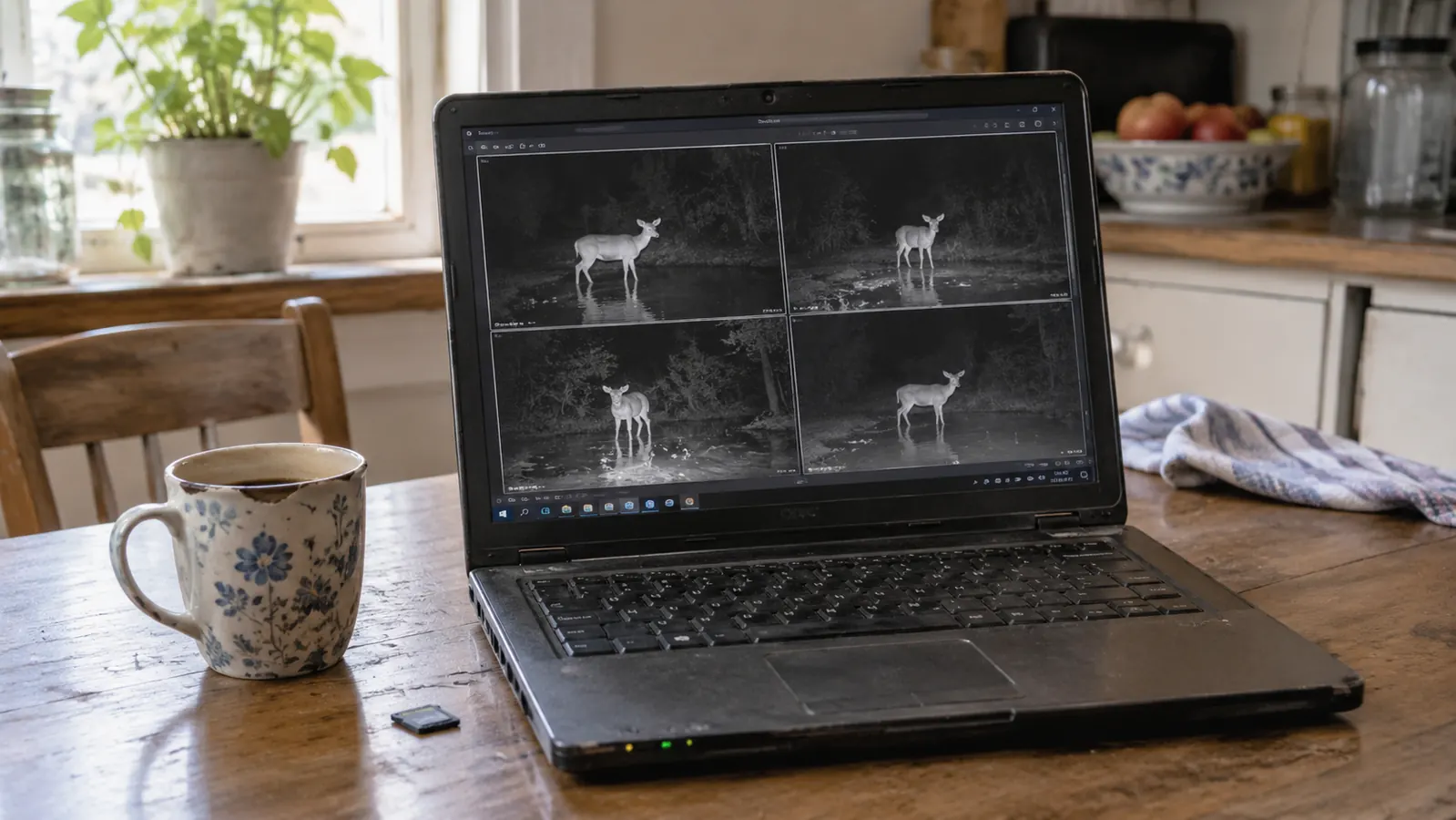
Mine has no cellular, no Wi-Fi, no app. It saves to an SD card, I carry the card back to the house, and I read it on my laptop. On 40 acres outside Cadiz, with a creek bottom that swallows a phone signal whole, that is not a limitation, it is the entire point. There is nothing to pair and nothing to subscribe to, so nothing fails on a cold morning when you are not there to fix it.
It tells you the hour to sit, so you stop burning mornings
Before the camera, I hunted mornings because mornings are what you do. Now I know that the last forty minutes of light is when that crossing is busiest in October, and that the first hour after daylight is dead until the rut pushes it. I sleep later and I sit better. A season holds a limited number of sits and the camera spends them for you in advance, which is the closest thing to a guarantee this hobby offers.
The trigger catches a walking deer instead of an empty frame
Cheap cameras are famous for firing late, and I expected to sort through a lot of rear ends leaving the picture. This one runs a PIR motion sensor with a fast trigger, and most of what I get is a deer mid stride with its head down. Not every frame. A deer moving quick at the far edge of the sensor will still beat it now and then, and I have the blurry shots to prove it. But I have never pulled a card that was nothing but blanks.
850nm infrared shows you the crossing after dark, when it is busiest
The night pictures are black and white, and they are where the real story lives. That creek crossing is a night place. The 850nm infrared reaches the far bank well enough to tell a doe from a buck, though at the back edge of its range the pictures go soft and grainy and I would not swear to a point count. I count that as honest reporting. It shows me the animal; it does not always show me the detail.
It catches everything else that walks your ground
Raccoons. A fox. A neighbor's dog with no business being that far from home. Coyotes working the bottom at four in the morning, which I had no idea about. If you have ever wondered why the turkey poults did not make it through June, a camera on one trail answers that question for you in about three weeks. Deer are not the only thing using your property and they are not the only thing worth knowing about.
Staying on one tree for a year shows you a season, not a snapshot
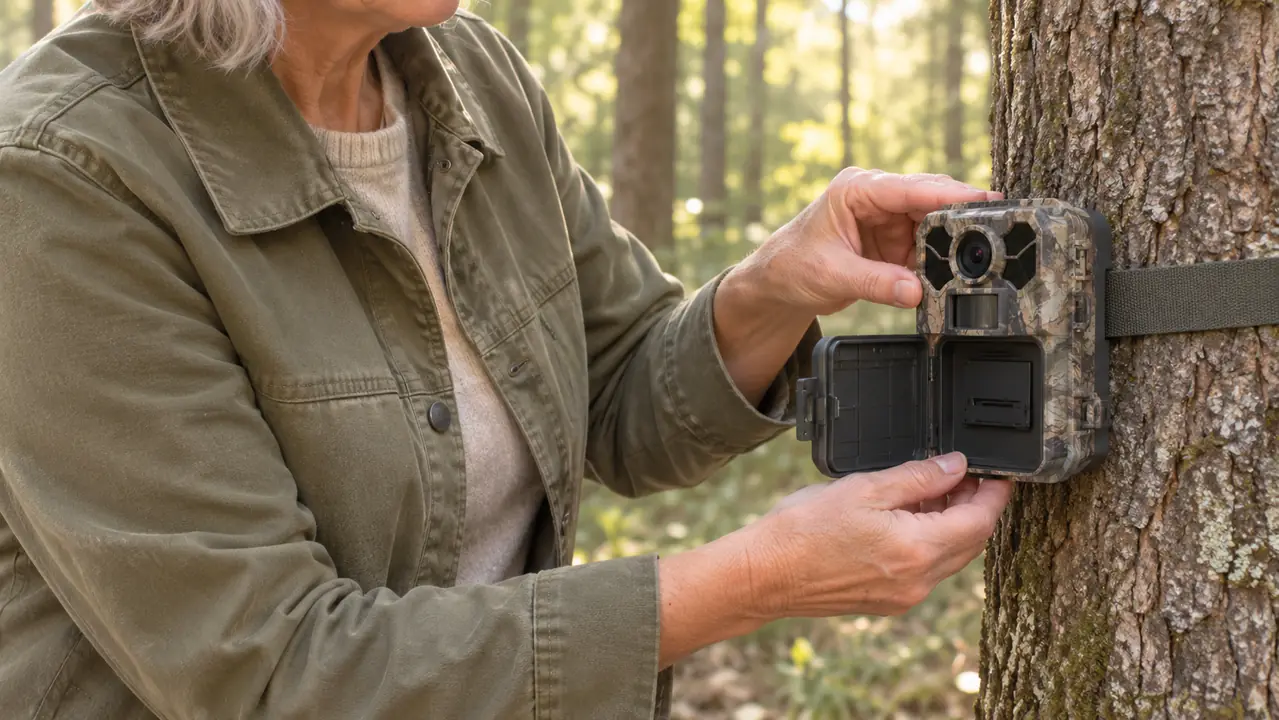
I have moved mine once since August 2025, and that was only to straighten it. Same white oak, waist height, looking down the trail toward the creek. Because it never moved, the pictures compare honestly. I can set October beside November and see the shift in when the does came through, and I can see how much earlier the daylight movement got once the rut was close. A camera you relocate every three weeks will never tell you that.
The thing is small enough that you forget it is on the tree
It measures 4.25 by 4.21 by 3.43 inches and weighs 11.68 ounces. I strapped it to the trunk and at ten paces you have to look for it. It has been out through rain and cold for a little over a year and it is still running. It is rated water resistant, not waterproof, so I would not park it where water stands. A camera you notice is a camera you fiddle with. This one I check and leave alone.
One picture is an anecdote. Two weeks of pictures is a pattern, and a pattern is the only thing you can plan a season around.
What I'd Skip
If you want to know what is happening on three trails at once, skip this and buy three cameras, because one camera watches one crossing and tells you nothing about the rest of your ground. If you want pictures on your phone from the kitchen, skip it too. The WOSPORTS camera has no cellular and no app, and checking it means a 15 minute walk from the gate with a card in your pocket. I happen to like that walk. You might not.
The other thing I would tell you straight is that the body is plastic and rated water resistant, not waterproof, so check it after a hard rain and do not mount it where water runs off a limb. And check your own state's rules on trail cameras before you hang one, because they are not the same everywhere and it is not worth a ticket to find out the hard way.
What it did for me was replace a decade of confident guessing with a year of actual pictures. I took one doe at the gate post in November 2025 and I knew the yardage because I had ranged it, and I knew the hour because the camera had told me. Neither of those things came from a hunch. For the money, that is the whole argument.
Stop guessing what the deer are doing after dark
One camera, one tree the deer already use, and a card you pull every two weeks. That is the entire setup. Everything after that is just paying attention.
Amazon Check Today's Price on Amazon →