
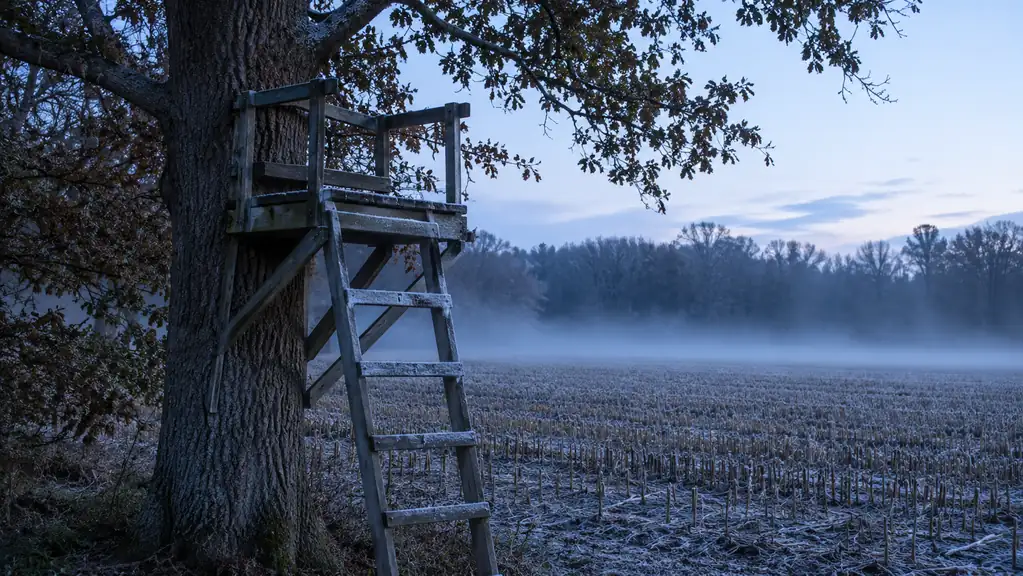
I missed a doe in November 2024 because I guessed. She was out past the far fence, I told myself a hundred and fifty yards, and I held high and watched her walk off into the hardwoods without a hair out of place. I was sixty years old, I had been hunting that ground since I was twelve, close to 50 years of it, and I had never once put a real number on that fence. Two weeks later, with a TIDEWE Hunting Rangefinder in my hand, I ranged it at 212 yards. That is not a rounding error.
A rangefinder does one job. It tells you how far away a thing is, close enough to a yard, and it does it in about the time it takes to breathe. It will not read the wind. It will not read the animal's nerves. It will not tell you whether you have any business shooting. Twenty years running a taxidermy shop out of a converted garage taught me the difference between a tool that does a job and a tool that sells a feeling, and a plain laser rangefinder is the first kind. I bought the TIDEWE in December 2024, about a month after that miss, and it has ridden in my jacket pocket every morning of the season since.
One real number beats a whole morning of talking yourself into it
The TIDEWE rangefinder reads from 3 to 700 yards with 6x magnification, holds to within a yard, and weighs less than a sandwich. It is the cheapest part of a clean shot and the piece I should have bought twenty years ago.
Amazon Check Today's Price on Amazon →Step 1: Range Your Marks From the Seat, Not From the Ground
The mistake I see most, and the one I made myself the first week, is ranging from the ground at the bottom of the ladder. It feels the same. It is not the same. My stand is a ladder stand against a big oak at the edge of the bean field, about a fifteen minute walk from the gate where I park, and when I am up in it my eye sits a good deal higher than it does standing at the base. That height changes the angle on everything, and while the change is small at my ranges, small is the entire conversation. So I climb first, harness on, and range from the seat with my back against the tree.
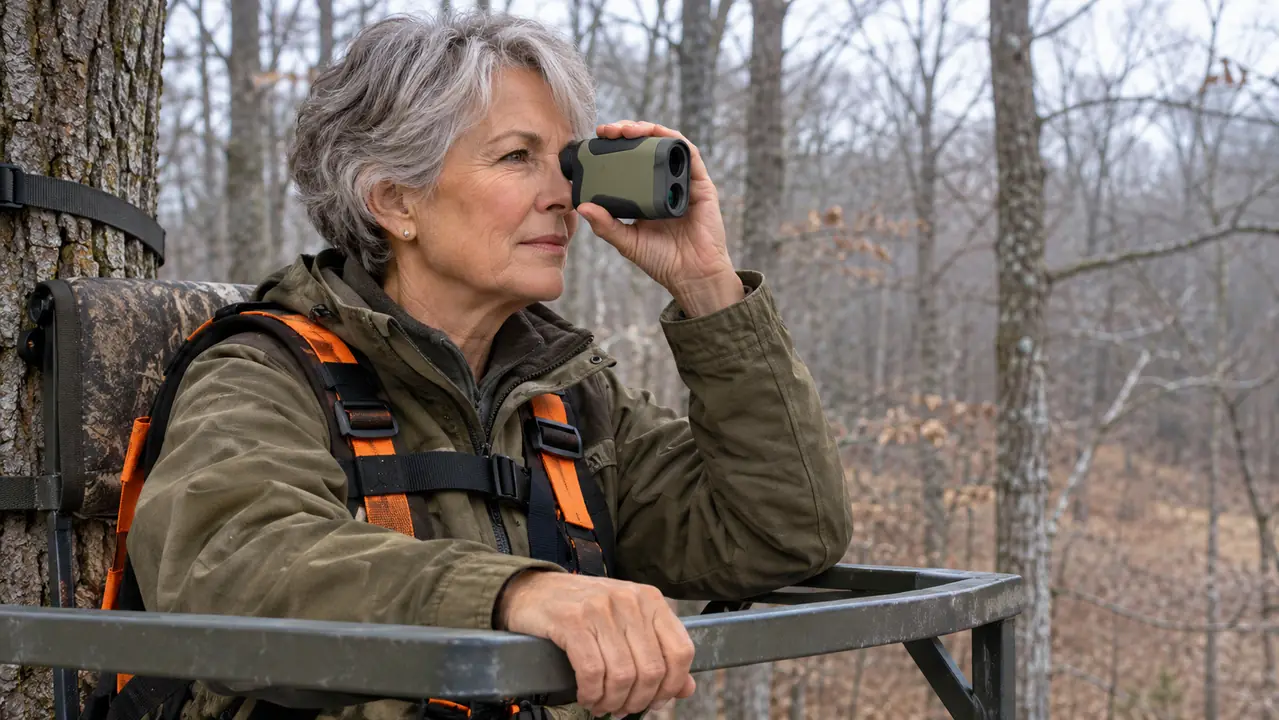
I do it before first light, in the dark or as close to it as I can manage, and on a morning I am not hunting when I can arrange it. Three marks only. The near oak at the edge of the timber line comes back at 48 yards. The gate post is 96. The far fence post down at the bottom is 212. Those are my three and they have not moved. Steady the rangefinder on the rail, hold it on the trunk or the post rather than the leaves beside it, and press the button once. The 6x magnification is enough to pick a post out of grey light, and the accuracy holds to within a yard, which is finer than anything I can do with a rifle.
Then do it again the next morning. And the morning after that, if the fog is heavy. Cold air, mist and a wet rail will all shorten a reading on you sooner than you expect, and I would rather find that out on a Thursday with nothing in front of me than on a Saturday with a deer standing at the gate post.
One more thing about the seat. If your stand has a rail, use it. I rest the rangefinder on the rail, or on my knee if the rail is too high, and I take the reading on a slow breath. Holding it in the air one handed is how you get a reading off the wrong tree and never know it. Mine weighs 5.67 ounces, light enough that the arm does not tire before the reading settles, but light is not steady. The rail is steady.
Step 2: Write the Numbers Down Where Your Eyes Already Go
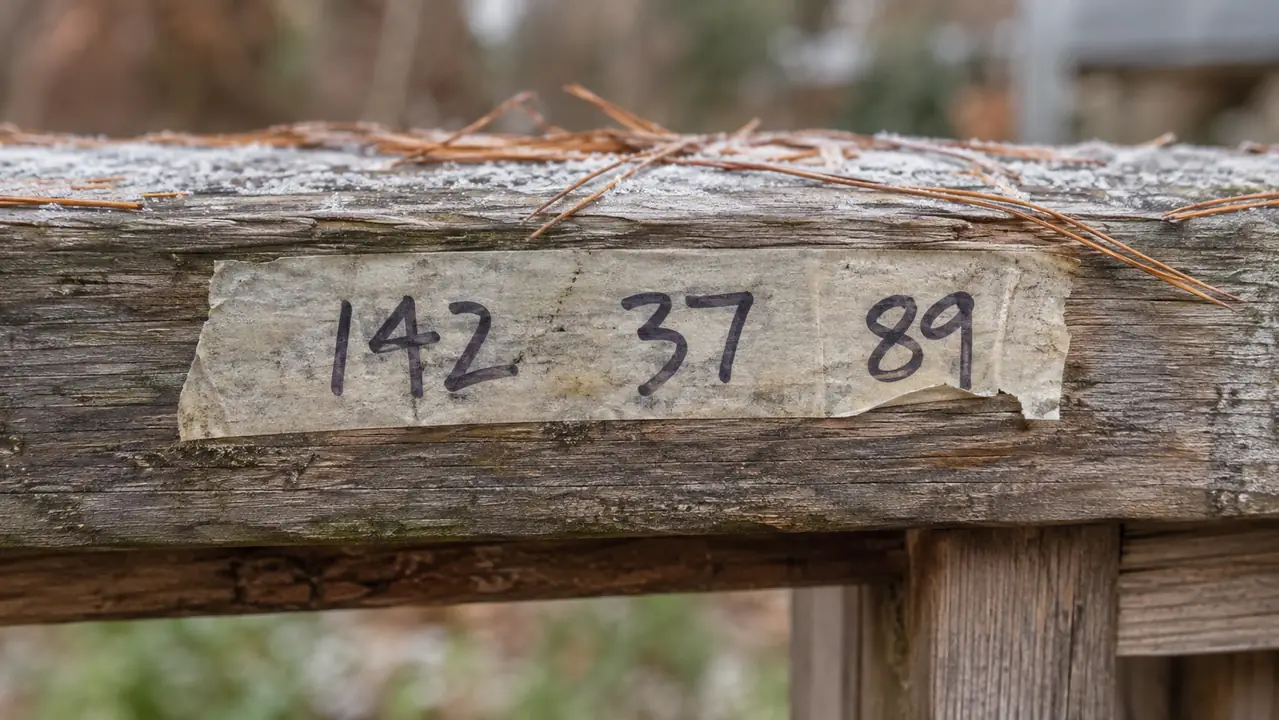
I write my three numbers on a strip of masking tape stuck to the rail just under my hand, in marker big enough to read at grey light: 48, 96, 212. Ray laughs at this. He does not hunt, he rides along on road trips and waits at the truck, and he says a woman who can misplace her reading glasses should not trust her memory on a deer. He is right, and it costs me nothing.
Here is the part that matters. At half light, with your heart going and an animal moving, you will not recall a number you saw on a little screen in September. You will recall a number taped six inches from your hand, and even then you will look at it twice. The rangefinder gives you the reading. The tape is what makes the reading usable. Mine is still there at the end of every season, faded and peeling, and I have never once thought about taking it off.
There is a second reason for the tape that has nothing to do with the rangefinder. It is a habit of mind. Every time I glance at those three numbers I am reminded that this ground has been measured, and that what I think I am seeing is not the same as what is there.
Step 3: Know Which of the Numbers You Are Reading
This one cost me an afternoon of confusion, so I will save you the trouble. The TIDEWE gives you more than one distance. There is the straight line distance, which is what the laser actually measured, and then there is the horizontal distance, the flat ground equivalent, which is the number that matters if you are shooting up or down a hill. It also reads vertical distance, and there is a speed function I have never used and cannot defend to you.
From my stand it makes no difference. I am not high enough and my ground is not steep enough for the angle to move the number more than a fraction of a yard at 212, and I have checked it more than once. So I read the straight line and get on with it. But if you hunt bluff country, or a gas line cut that drops away from you, read the horizontal number and ignore the rest. That is the one that matches your ballistics.
What I would tell you is to sit with the thing on the kitchen table in September and press through every screen until you know which number is which without thinking. A tool you have to puzzle over in the dark is a tool you will leave in the truck.
The far fence had been a hundred and fifty yards in my head for twenty some years. It was 212. I had been guessing at the most important number in the whole morning.
Step 4: When the Animal Shows, Range the Ground at Its Feet
A laser needs something honest to bounce off. A deer's coat at 200 yards in flat light will sometimes give you a reading and sometimes give you a shrug, and brush between you and the animal will give you the brush. So I range the ground at the animal's feet, or the bare trunk of the tree it is standing beside, and I take that number. It is close enough to make the decision and far more reliable than trying to paint a laser on hair.
The other thing I do is bracket. I already know the gate post is 96 and the far fence is 212. If a deer is standing between them, closer to the post than the fence, I have a good idea what I am looking at before I ever lift the rangefinder. The reading confirms it. That order matters, because it keeps me from ranging an animal for the fun of it and then talking myself into a shot I had already decided against.
And be honest about light. In the last ten minutes of legal shooting hours the screen can be brighter than anything you are looking at, and it will cost you your night vision for a minute or two. I range early and I range once. If I did not get my marks before the animal showed, I do not start fiddling with a screen while she is standing there deciding whether to stay. Check your own state's rules on shooting hours and keep to them; the number on your tape does not override the clock.
Keep it dry. It is rated IP54, which means water resistant, and I do not care what any listing says beyond that. It lives in its case in my jacket chest pocket, and in real rain I put it away. A foggy morning is fine. A soaker is not.
Step 5: Set Your Own Limit and Let the Number Hold You To It
My limit is 150 yards. Not because the rangefinder stops there, it reads from 3 to 700, but because that is the distance at which I know what I can do with the rifle I have shot for years, from a seated position, with my heart going. Your number is yours. Pick it on paper in July, not in the stand in November.
The far fence at 212 is decoration. It is the boundary of what I am allowed to think about, and the rangefinder is what reminds me of that when a big body steps out down there and every instinct says to try it. In November 2025 I took a doe at the gate post. 96 yards, ranged from the seat, safety harness on, one shot, and she did not take a step. That is not a story about a rangefinder. That is a story about knowing the number before the animal ever arrived.
I have been tempted. Anybody who tells you they have not been tempted is either a saint or has not hunted much. The difference now is that I have a number to be tempted against. Guessing at 180 when the truth is 212 is how a person talks himself into a bad decision. The rangefinder closes that gap, and what is left after it closes is just you, your rifle and your own judgment about what you are good for.
Where a tool like this earns its place is not the shot you take. It is the shot you decline, and the fact that you declined it for a reason instead of a feeling.
What Else Helps
Carry it in the case it comes with and keep it in a chest pocket, not the lid of a pack. It weighs 5.67 ounces and measures about 4.13 by 2.61 by 1.49 inches, small enough that I forget which pocket it is in and then pat myself down like a fool at the base of the ladder. Between seasons it sits on the gun cabinet shelf next to nothing important. The TIDEWE is rechargeable, so I top it off the same week I charge the headlamp, before the season starts. A rangefinder with a dead battery is a very expensive set of binoculars.
If you want to know where a piece of gear is weak, ask what it cannot do. This one cannot tell you the wind between you and the animal, and it cannot tell you whether the animal is going to take one more step while you are deciding. It also will not survive a dunking, whatever the listing implies. Keep it out of the creek bottom and off the wet rail and it will last. Nearly two years of mornings on mine, and it still reads 48, 96 and 212.
The rest is the boring part. Harness on before you climb. Blaze orange during gun season. Check your own state's rules on shooting hours, limits and what you may and may not do with a light, because they are not the same in Kentucky as they are where you live. And understand what you bought. A rangefinder does not make a 200 yard shot into a 100 yard shot. It tells you the truth about which one you are looking at, and then you have to be the kind of person who acts on the truth.
I paid attention to the warranty when I bought it, one year from the manufacturer, and I have not needed it. The listing claims more range than I will ever use on the back forty. Nearly two years in, mine reads the same three marks every morning and has not drifted.
The cheapest part of a clean shot is knowing the distance
It rides in a jacket pocket, reads in a breath, and it is the reason I passed on a shot I would have taken on faith. Range your marks from the seat, tape them to the rail, and hold your own limit.
Amazon Check Today's Price on Amazon →