
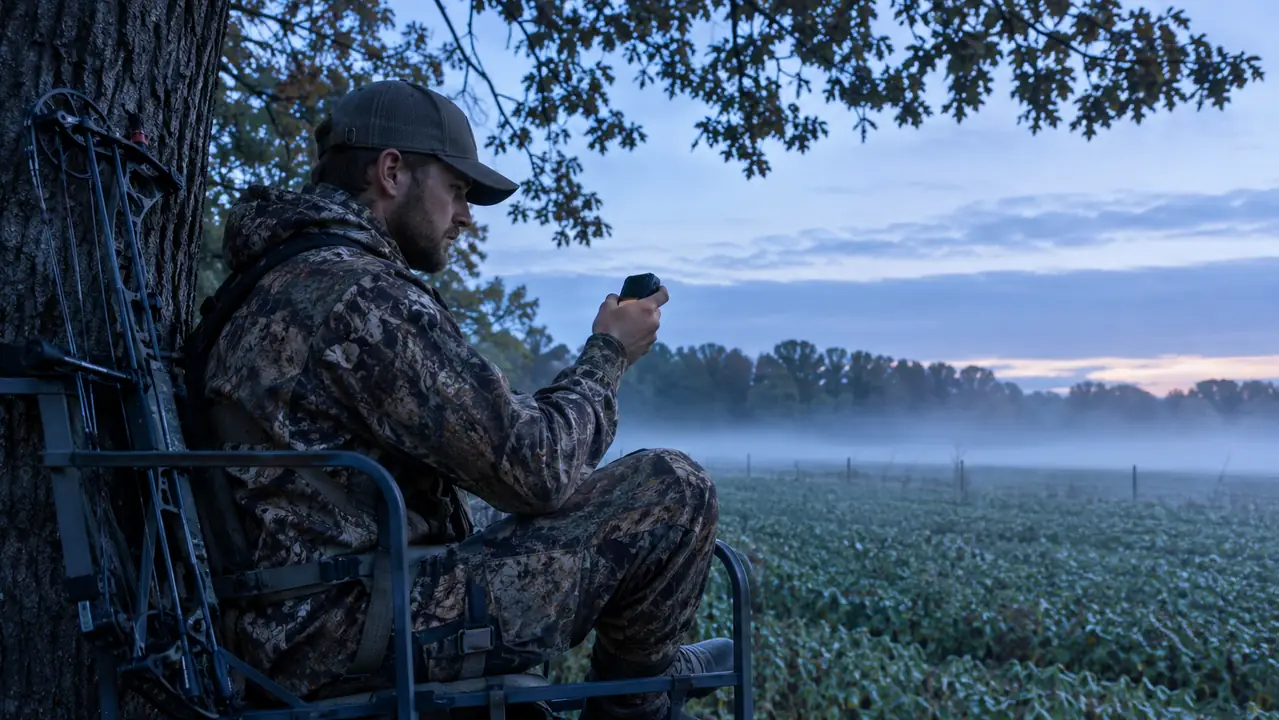
In November 2024 I missed a doe at the far fence on the back forty. Not a bad hit. A clean miss, entirely. I had looked at that fence for years and told myself it was about 150 yards, because that was the edge of where I was willing to shoot and I suppose I wanted it to be true. It was not 150 yards. It was 212, and I found that out a month later with the TIDEWE hunting rangefinder I bought in December, mostly out of embarrassment. The doe ran off unhurt. I have thought about that morning a good deal more than she ever did.
I am 61. I ran a taxidermy shop out of a converted garage for 20 years before I closed it in 2023, which is a long way of saying I have spent a lot of hours looking closely at how things are put together. Twenty years of that and you form an opinion about seams and hinges and whether a thing was made to last or made to sell. A rangefinder is a small plastic box with a laser in it. I did not expect to like it. I expected to use it, which is different.
The Quick Verdict
A small, light, rechargeable laser rangefinder that reads my three fixed marks the same way every morning. Nearly two years in, it has not lied to me once. The case is the weak part.
Amazon Check Today's Price →Three marks, read the same way every morning for two seasons
If you have been guessing at distance from the same stand for years, this is the cheapest way to stop guessing. Rechargeable, 5.67 oz, rated 3 to 700 yards.
Amazon Check Today's Price on Amazon →How I've Used It
I bought the TIDEWE in December 2024, a few weeks after the miss, and I have owned it nearly two years now. It was not a considered purchase. I went looking for something rechargeable because I am tired of buying batteries, and this one was, and it was small, and I bought it.
It lives in my jacket chest pocket inside its case. Between seasons it sits on the shelf in the gun cabinet, which is where anything I do not want to lose ends up. I have never dropped it, never lost it, never sent it back. It has been out in cold mornings and wet mornings and one morning with enough fog that I could not have told you where the far fence was without it.
The first morning I carried it out was the second week of December 2024, cold enough that I wore a thin pair of gloves and had to pull the outer glove off to work it. I ranged the near oak and got 48, which matched nothing in my head, because I had never put a number on that tree in my life. Then the gate post, 96. Two summers before, I had paced that post off from the base of the stand and come up with something near 80, and I had believed the pacing for two years. Then the far fence, 212. I sat there a while with that one. That afternoon I walked the fence line with a tape and it came out within a couple of yards of what the unit said. That was the end of my pacing career.
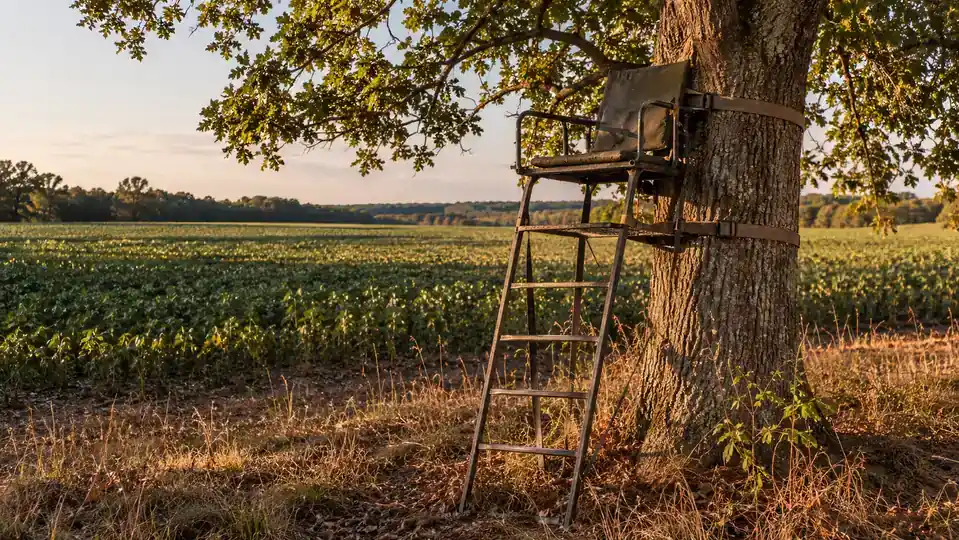
My use is narrow and it has not changed. I climb into the one ladder stand I have, on the big oak at the edge of the bean field, about a 15-minute walk from where I park. Then before it is light enough to see, I range three things. The near oak is 48 yards. The gate post is 96. The far fence is 212. I do it every single morning, in the same order, because those three numbers are the whole map of what I am allowed to think about from that seat. My own limit is 150 yards, and two of those three marks are outside it.
That is the entire job. Not scanning the countryside. Not glassing. Three readings, then the device goes back in the pocket and I sit down.
What 6x Magnification Actually Gets You
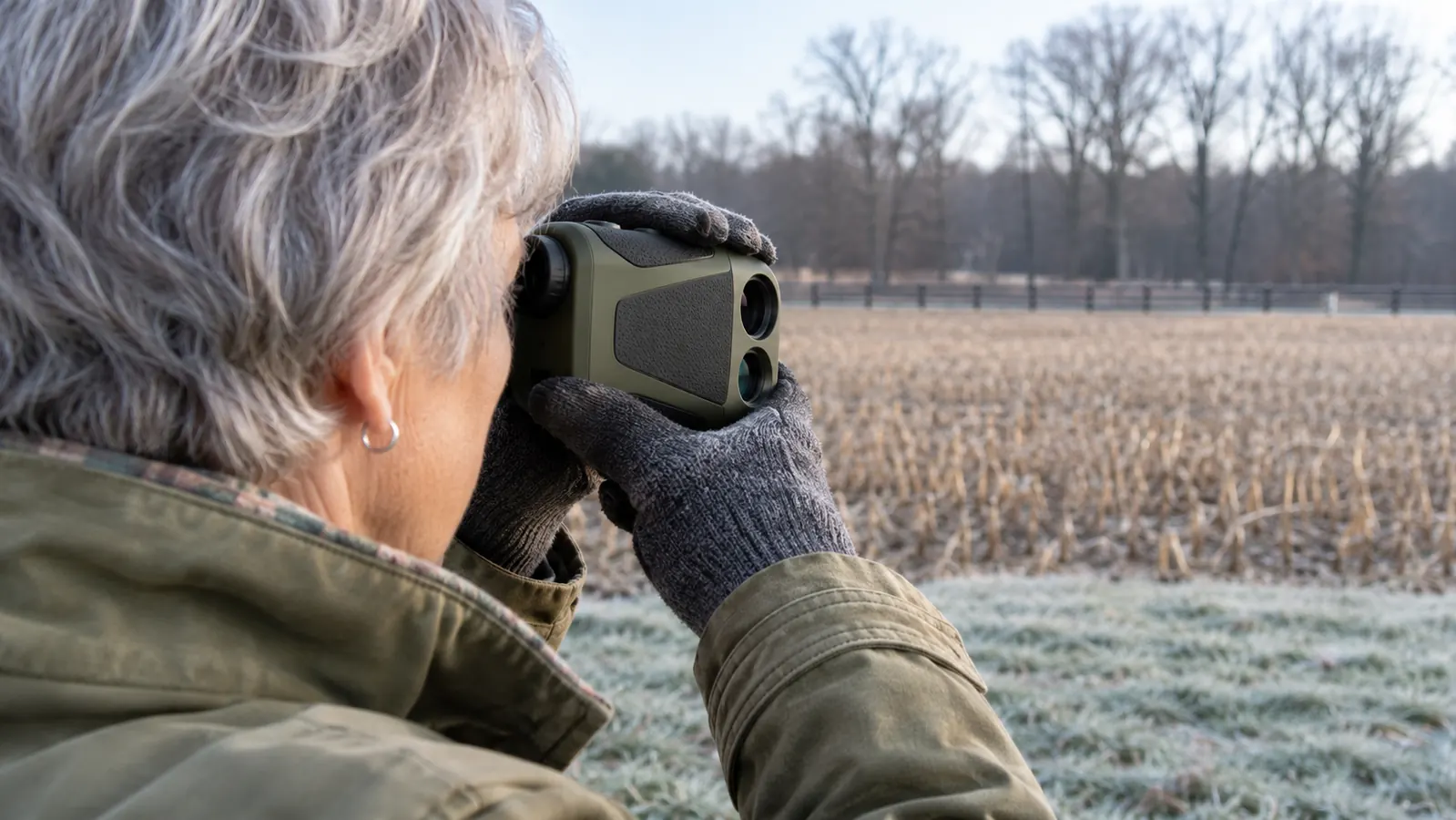
Six power is modest as optics go, and I want to be honest about what that means. When I raise the TIDEWE to my eye, the fence post at 96 yards fills a reasonable part of the view. It is not a spotting scope. At 212 yards in low light, I can put the aiming point on the fence and get a number, and that is what I need. If you are hoping to identify antlers at distance through this thing, you will be disappointed, and you should be disappointed, because that is not what it is for.
The specs say 3 to 700 yards with plus or minus one yard of accuracy. I can only speak to the part of that I use. Everything I range is between 48 and 212, and it has read those three marks consistently across two seasons. I have ranged the near oak probably two hundred times now. It says 48. It said 48 in December of 2024 and it said 48 last week.
Most of my ranging happens in the twenty minutes before legal light, which is the worst condition there is for anything with glass in it, so let me be plain about how that goes. In the gray before sunup the near oak is easy and the gate post is easy. The far fence is a wire fence against a dark treeline, and some mornings it takes me three presses to get a reading I believe, and some mornings I get nothing at all and I wait five minutes and try again once there is more light in the sky. I do not count that against the unit. A man at the ramp with a fancier one says his behaves the same way at first light. What matters to me is that when it does read, the number matches what I get in full daylight.
Where I would expect a cheap laser to fall down is the far end, in bright sun, on something not very reflective. I do not have a use for 600 yards on 40 acres, so I cannot tell you the 700 is real. What I can tell you is that the number it gives me inside 250 has never made me doubt it, and after a miss caused by my own arithmetic, I am not a trusting person about distance.
The Size and the Weight, Which Is the Real Story
It weighs 5.67 ounces. The specs list it at 4.12 by 2.61 by 1.5 inches. I did not appreciate those numbers until I had carried it. I keep it in my jacket chest pocket and I genuinely forget it is there, which is the highest thing I can say about a piece of gear I carry up a ladder in the dark with one hand on the rail.
Here is the part nobody mentions about a small device: in November you are not handling it with bare hands. I wear a thin pair of gloves with an outer glove over them, and I have worked this thing one-handed with the outer glove off and had my hand back in my pocket inside of ten seconds. It is light enough that holding it up does not tire my arm, which matters more than it sounds when you are 61 and the temperature is in the twenties and you are standing on a ladder platform. I have also knocked it against the rail more than once getting settled, and it has not cared.
The body is plastic, and it feels like plastic. Nobody is going to hand this down to a grandchild. But the trade is that a heavier metal body would pull at a jacket pocket all morning and I would stop carrying it, and gear you stop carrying is worthless.
It is rated IP54, which I would call water resistant and not waterproof. I have had it out in rain and fog and damp and it has kept working. I have not dunked it in the creek and I do not intend to. If you are the kind of person who leaves things in the bottom of a boat, understand what IP54 means before you spend anything.
Rechargeable, Which Is Why I Bought It
The battery is lithium-ion and it charges, and that is the reason this specific unit ended up in my hand. I have a small pile of dead nine-volts in a drawer from other devices over the years and I am done adding to it. I charge it on the kitchen counter before the season and then more or less forget about it, topping it up every couple of weeks during gun season when I remember.
The one stretch where I paid attention was the cold snap in November 2025, five mornings running in the twenties. I made a point of checking the unit before I climbed each of those mornings, and it was still working on the fifth one, and I had charged it the week before the season opened and not since. I do not know what that works out to in milliamps and I am not going to pretend I measured it. I know what it means in a stand at six in the morning, which is that I did not have to think about it.
My habit, for what it is worth, is to charge it the week before the season opens and again around the middle. It has never run flat on me in the stand. I do not know how many mornings a charge is good for and I will not invent a figure.
What It Measures, and the One Function I Ignore
The TIDEWE gives you straight-line distance, vertical distance, horizontal distance, and speed. Straight-line is the one I use. Horizontal distance matters on a downward shot from a stand and it is good that it is there, though on a 15-foot ladder stand over flat bean ground the difference is small enough that I do not fuss about it.
Speed I have never once used. I do not know why a hunting rangefinder has it and I am not the person to ask. It is there. I ignore it. I mention it so you know it is there and you can ignore it too.
I have ranged the near oak probably two hundred times. It says 48. It said 48 in December of 2024 and it said 48 last week.
The Case, Which Is the Weak Part
The unit comes with a case and the case is the one thing I would complain about. The zipper is fine but the belt loop is not something I trust, and I stopped using it as a belt item in the first week. It goes in the chest pocket instead, loose in the case, and that has worked for two years.
That is a small gripe. It is also the honest reason this is an 8.7 and not a 9.5. The glass and the laser have been flawless for my use. The soft goods around it were an afterthought.
What I Liked
- Reads my three fixed marks identically across two seasons, no drift
- 5.67 oz disappears in a jacket chest pocket
- Rechargeable lithium-ion, no battery drawer
- IP54 has handled rain, fog and cold mornings
- Straight-line, vertical and horizontal distance all present
- Simple enough to use before first light without thinking
Where It Falls Short
- Plastic body feels like plastic
- Included case has a belt loop I do not trust
- 6x is not enough to judge antlers at distance, and it is not meant to be
- IP54 is water resistant, not something to dunk
- Speed function is dead weight for a hunter
Who This Is For
This is for the person who sits in the same stand or the same blind over the same ground, season after season, and has been estimating distance with their eyes and their pride. If you have a fixed set of marks you care about, and you want to know what they actually are, this will do it and keep doing it. It suits someone who wants one number, quickly, in the dark, without a menu.
It also suits anyone tired of buying batteries, and anyone who has walked ground they thought they knew and found out otherwise. Rechargeable was the whole reason I switched, and I would make that choice again tomorrow.
Who Should Skip It
Skip it if you want optics. Six power is not a substitute for binoculars, and if you are trying to judge a buck at 300 yards before you decide anything, this is the wrong tool and you will be unhappy with it the first morning.
Skip it if you shoot long and often, past 300 yards, and need a laser that is proven at the far end of its rating. I cannot vouch for that end of the range and I would not spend your money pretending I can. And skip it if you want a metal body that will outlive you. This is a plastic tool and it is honest about that.
One more thing, and I mean this plainly. Buying this did not make me a better shot. It told me the truth about a fence I had been lying to myself about for years. That is all it does, and it turns out that is worth a good deal. If you hunt from a stand on ground you know, and you have never actually measured the marks you hunt by, do that before next season. Check your own state's rules on hours and limits while you are at it, and wear your harness. The rest is just arithmetic.
Stop guessing at the fence line
Nearly two years, one ladder stand, three marks. If you have been eyeballing distance from the same seat for a decade, this is the fix, and it takes about ten minutes to learn.
Amazon Check Today's Price on Amazon →