
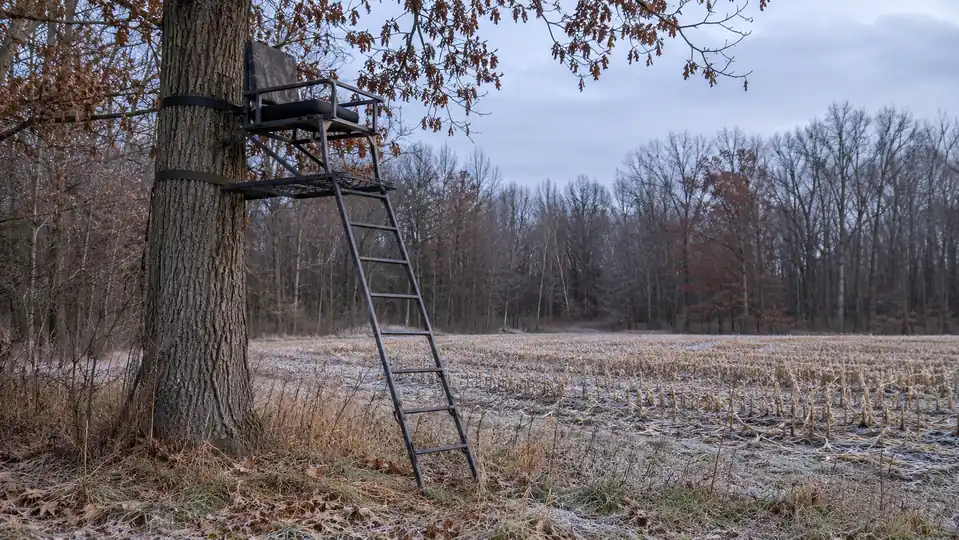
I missed a doe in November 2024 because I guessed at the distance instead of knowing it. She was out by the far fence on the back forty, and in my head she was about 150 yards off, so that is what I held for. The shot went over her back. She ran off and she was fine as far as I could see, and I sat in that stand feeling like a fool. A month later I bought a TIDEWE hunting rangefinder. The first thing I ranged from the same seat was that fence. Two hundred and twelve yards. I had been off by more than sixty, and at that distance sixty yards is not a rounding error, it is a clean miss.
So when somebody at the ramp asks whether the TIDEWE is enough rangefinder or whether the extra money ought to go to a Bushnell BoneCollector, I understand the question. I have had the TIDEWE nearly two years, bought new in December 2024, and it rides in my jacket chest pocket in its case from the first morning of gun season to the last. I have never owned a Bushnell. I know the BoneCollector from the listings, from the published specs, and from two fellas at the ramp who have carried one for years and are not shy about an opinion. Here is the honest split, including the places where I think the other one is the better buy.
| TIDEWE | Bushnell BoneCollector | |
|---|---|---|
| Price tier | The cheaper of the two by a fair margin, and it does every job I have for a rangefinder. | Costs more. Some of that is the name, and some of it is a longer track record. |
| Power | Rechargeable lithium-ion. Charges off a cable on the kitchen counter. | Runs on a cell you swap out, so a dead unit is a two minute fix instead of a wait. |
| Reach | 3 to 700 yards, accurate to plus or minus one yard. | More reach than anybody shooting inside 200 yards will ever use. |
| What it reads | Straight-line, vertical and horizontal distance, plus a speed reading I do not use. | Handles the one number a rifle hunter actually needs. |
| Weather | IP54. Water resistant, and I treat it that way. It is not a submarine. | A company that has been sealing up optics for a long time. |
| Best for | One unit, recharged, that covers all 40 acres and then some. | The hunter who wants the name he grew up reading about. |
Where TIDEWE Wins
The money is the first thing and I will not dress it up. The TIDEWE is the cheaper of the two by a fair margin, and it does the whole job I have for a rangefinder, which is telling me how far away a deer is before I decide whether to raise the rifle at all. My three marks from the ladder stand have not changed since the day I ranged them: the near oak is 48 yards, the gate post is 96, and the far fence is 212. It reads all three the same in gray light or in flat daylight, and it reads them within a yard. Six power is plenty to put the reticle on a deer's shoulder at those distances. I do not need to count eyelashes to know the yardage. The first week I had it I ranged everything on the place just to see whether it would give me the same answer twice. The barn door, Ray's truck sitting at the gate, a dead limb out in the bean field, a fence post I had already stepped off by hand. It gave me the same number every time, and it matched the post I had walked out. That is a low bar and a lot of gear does not clear it.
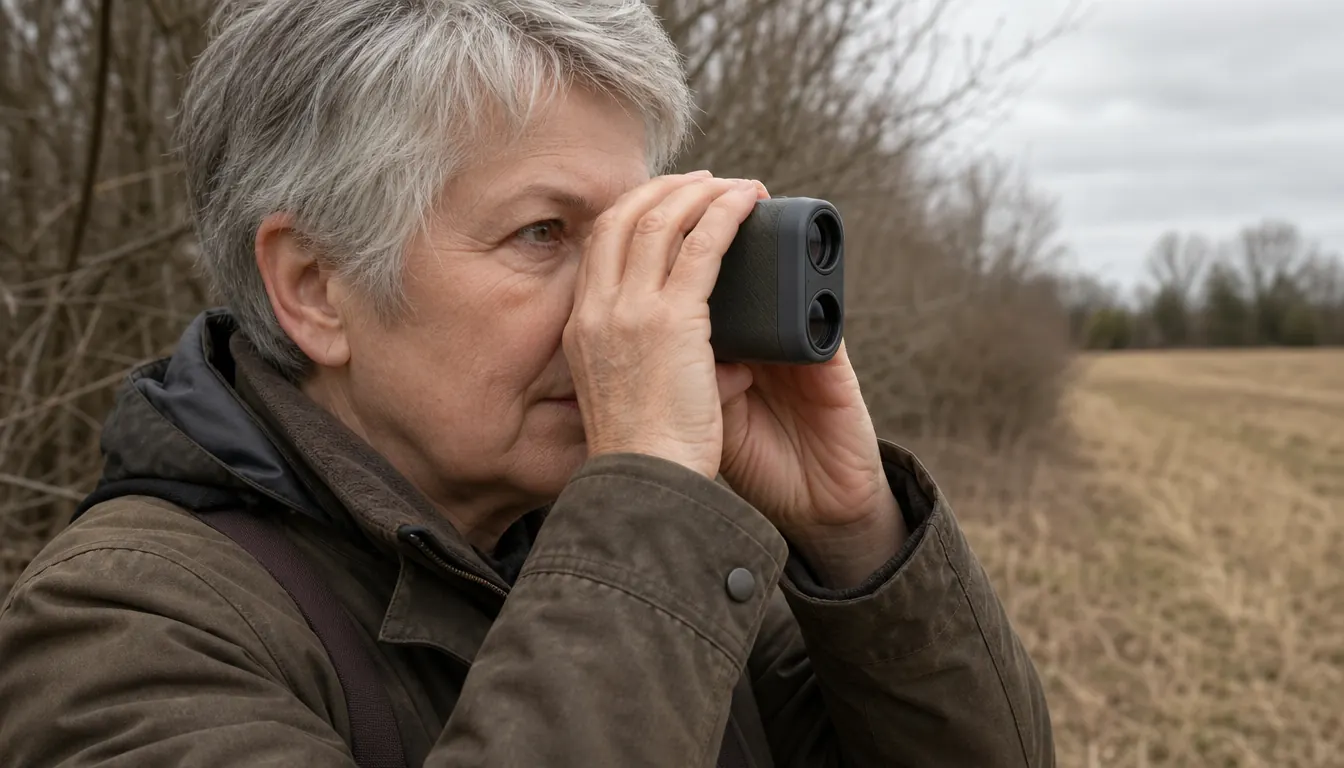
It is also small and quiet about it. Five and two thirds ounces, four and an eighth inches long and two and five eighths wide, and it drops into a jacket chest pocket and stays there. I have worn it against my chest on mornings in the low twenties and never once had it bang against the stand rail when I turned to look behind me. The case that comes with it has kept the glass clean through two seasons of being leaned against a tree and rained on. The rechargeable part matters more than I expected. I plug it in on the kitchen counter a time or two a season, usually the night before opening day while the coffee is still going, and I have never had it die in the stand, which is more than I can say for most things I carry that take a battery. Between seasons it sits on the gun cabinet shelf, and it comes back out working.
Where the Bushnell BoneCollector Wins
The battery is where the Bushnell has it right, and I will say so plainly. A rechargeable unit is a paperweight when the charge runs out and there is no outlet handy, and that happens in a camp bunkhouse a lot more easily than it happens in my kitchen. A rangefinder that takes a cell you swap turns a dead unit into a two minute fix if you keep a spare in your pack. I keep a spare of nothing because I do not own a BoneCollector, but I have watched a fella at the ramp change his out and go straight back to shooting while I was still digging for a cable. That is a real advantage and it is not a small one. If I hunted out of a camp for a week at a time instead of walking back to my own kitchen every evening, I would weigh that a lot heavier than I do.
The other thing the Bushnell has is a long run of people saying its name out loud. Walk into any shop that sells hunting gear and the clerk knows what a BoneCollector is. That sounds like foolishness until you are the one standing at the counter on a Friday night before the season opens with a question and a hunt the next morning. Bushnell has been building optics for a good while, folks speak well of their service, and when you lay one down beside mine on a tailgate, the fellow across from you knows which one he is looking at. Some of that is worth paying for. I said some.
The one that has been in my chest pocket since December 2024
6x magnification, 3 to 700 yards, accurate to a yard, rechargeable, and small enough that I forget it is there until I need it.
Amazon Check Today's Price on Amazon →What the Marks on My Land Actually Look Like
I range the three marks most every morning before it gets good and light, out of habit more than need. The near oak at 48 is where a deer will step out of the hardwoods, and I want that number without moving my arms much. The gate post at 96 is the one I trust most. The far fence at 212 is the number that cost me a deer, so I check it every time. In November 2025 I took a doe at the gate post, 96 yards, and I knew it was 96 before I ever touched the trigger. That is the whole argument for carrying one of these, and it does not matter whose name is stamped on the side.
The morning I took that doe, the fog was still sitting in the creek bottom when it got good and light, and the gate post was a smudge I could barely find in the scope. I put the rangefinder on it anyway and got 96, same as always, because the laser does not care what my eyes can sort out. That is the part I did not expect when I bought the thing. A rangefinder is not just a better guess. On a morning like that one it is the only number you have that you can trust, and there is a good deal of comfort in that when your hands are cold and your glasses have fogged twice already.
What I have come to care about more than reach is repeatability. A rangefinder that says 211 one morning and 218 the next is worse than no rangefinder at all, because you start believing it and then you start holding differently. Mine has given me those same three numbers for two seasons, warm weather and cold, and I checked it once against a known distance to satisfy myself. If you are shooting inside 200 yards on ground you already know, that consistency is the entire feature list you need. Everything past that is a number printed on a box.
Two hundred and twelve yards. I had been off by more than sixty, and at that distance that is not a rounding error, it is a clean miss.

The Parts I Do Not Use, and the One Thing That Surprised Me
There is a speed setting on it. I have never used it and I do not expect to. I do not shoot at running animals, so a speed readout is a feature that exists for somebody else's hunt. There is also far more ranging distance than I will ever need. Seven hundred yards is a long way past my own 150 yard limit and past anything I can see on 40 acres, so the extra reach is not a selling point to me, it is just a bigger number on the box. I would rather have honest glass at 212 than a big number at 700.
The surprise was the weather rating. It is IP54, which means water resistant, and I want to be careful there because a person could read a listing and think it goes in the creek. It does not. Mine has been rained on more than once, and it fogged at the eyepiece a single time on a cold morning when I came out of a warm truck, and it cleared in a minute. I keep it in the case when it is not around my neck and I do not set it down in wet leaves. Treated that way it has been fine, and I have no complaint about it. The one year manufacturer warranty is the other thing worth knowing about, not because I have needed it, but because it tells you the company expects the thing to keep working.
What I Got Wrong Before I Bought It
I thought I needed more magnification. Six power sounded like not much to a person who spent twenty years looking at small things through a magnifying lamp with a bright ring around it. It is plenty. The higher the power, the harder it is to hold steady without a rest, and in a ladder stand with your elbows on your knees, six is about all a body can use anyway. I also thought the horizontal distance reading was a gadget for bowhunters. It is not, not when you hunt ground that rolls, and mine rolls good and hard down toward the creek bottom. On flat ground it makes no difference at all. On my ground it is the difference between a number that means something and a number that does not.
The other thing I got wrong was the wait. I put off buying one for years because I told myself I could judge distance. I had been judging distance for close to 50 years and I was still sixty yards wrong on the one that counted. That is the taxidermist in me, I suppose. Twenty years of putting a tape on things taught me the eye is a poor ruler and a habit is a worse one, and yet I went right on trusting mine until a doe ran off unhurt to prove me wrong. If you have been telling yourself the same story about your own eye, you already know how that story ends.
Who Should Buy Which
If you hunt your own ground, shoot inside 200 yards, and want one unit that ranges every mark you have and charges on the kitchen counter, buy the TIDEWE and put the difference into ammunition and practice. That is what I did and I would do it again. It has been in my pocket two seasons, it has never let me down, and I have not once wished I had spent more on a rangefinder. It is a plain tool that does a plain job, and I have a lot of respect for that. Go out the week before the season and range the things you already know, and let the unit argue its own case.
If you travel to hunt, if you are away from an outlet for a week at a stretch, or if you simply want the name every clerk and every fella at the ramp already knows, buy the Bushnell BoneCollector. I am not going to tell you it is a poor piece of equipment, because it is not, and a hunter carrying one is not poorly fixed. Whichever you carry, take it out before the season and range something you already know the distance to. The number that comes back will tell you more about the unit than any listing ever will. And range your far fence, whatever you buy. That is the one that will teach you something.
Range your own far fence before the season opens
The TIDEWE rangefinder I have carried since December 2024: 6x magnification, 3 to 700 yards, rechargeable lithium-ion, case and one year manufacturer warranty included.
Amazon Check Today's Price on Amazon →