
Two Octobers back I bought a two-pack of headlamps I had never heard of, and I did it for a dumb reason. My dad's old flashlight still lives in the kitchen drawer, and walking to the stand with one hand full of light had worn me out. That is the whole origin story of the LHKNL headlamp on my shelf. I am not a gear tester. I ran a one-woman taxidermy shop out of a converted garage for twenty years, I have hunted and fished for close to 50 years, and I notice how a thing is built because I spent two decades looking at the seams other people made. So here is the honest version, including the parts the listing page leaves out.
What nobody tells you about a two-pack of anything is that the second one is the real test. My spare LHKNL lives in the truck. It has sat through two Kentucky summers and a cold snap that froze a water bottle in the cab, and it still turns on. That says more to me about the build than any spec sheet does. The shell feels solid, the band adjusts without a fight, and the lamp head pivots. It is not junk. It is also not the lamp I would hand somebody heading into strange country after dark, and I will get to why.
The Quick Verdict
Two lamps, one honest limitation: a center hotspot that suits a dark walk much better than close work. Mine is two years old and still goes in the jacket every November.
Amazon Check Today's Price →Two lamps, two cables, and a spare that stays in the truck
The second lamp is the part of this two-pack I use most. It lives in the truck already charged, which is the only reason a spare is worth owning. Check today's price and confirm both cables are still in the box.
Amazon Check Today's Price on Amazon →Let me be plain about my frame of reference. Before this I carried my dad's flashlight, which is a good light and still works. I did not replace it because it failed. I replaced it because a ladder stand at five in the morning needs both hands, and a flashlight in your teeth is not a method. That is the honest reason most people end up buying a headlamp, and it is worth saying out loud, because these listing pages all pretend you are buying light when what you are really buying is hands.
What the Listing Doesn't Say Out Loud
The first thing the listing does not spell out is that the two-pack is what makes this lamp useful, not the lamp alone. One goes on your head, the second goes in the truck, and the two USB-C cables get separated the first week: one for the kitchen counter, one for the glovebox. I have never needed both lamps lit at once. What I have needed is a light that is already charged in a place where I am not standing. That is what the second lamp actually buys you, and nobody frames it that way.
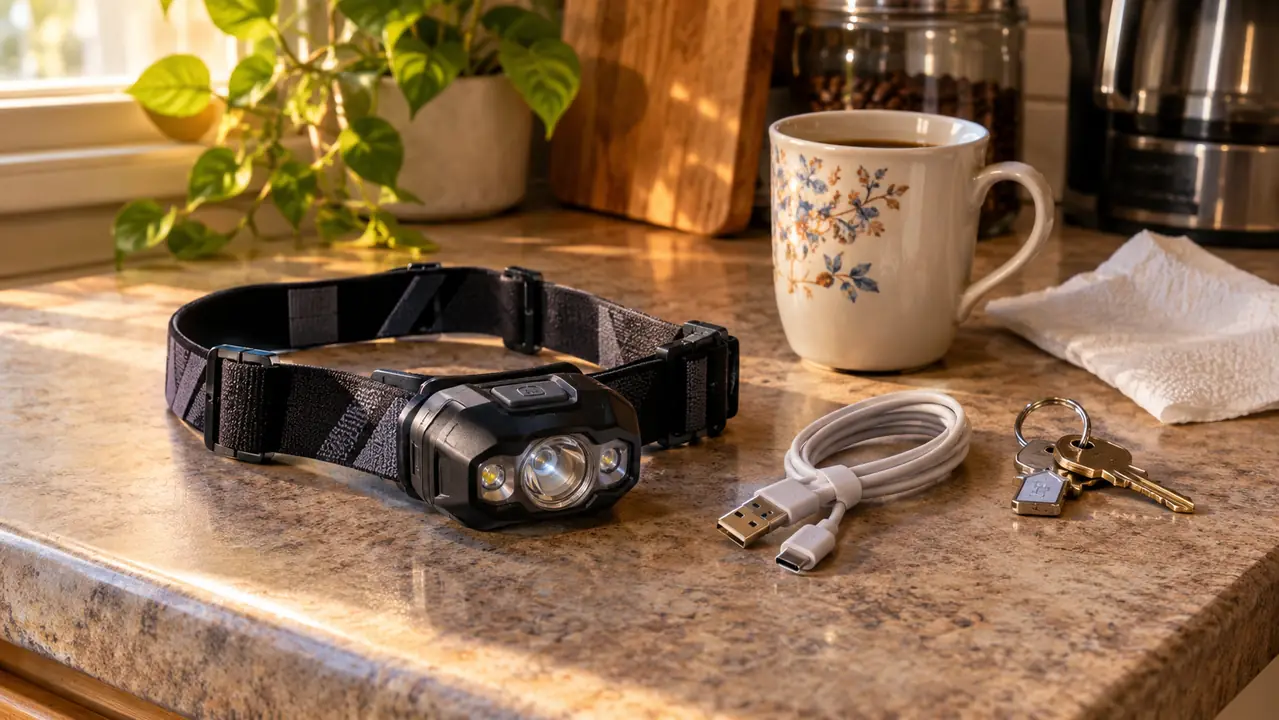
The box contents are short and worth reading before you order, because people assume things that are not there. Two headlamps, two USB-C cables, two head bands and a user manual. No wall charging block. No spare battery, because there is no compartment for one. If you were expecting a brick to plug into the wall, you will be using one you already have in the kitchen, which is normal now and still worth knowing before the box arrives and you go looking for something that was never coming.
The second thing is the mode button. Hold it about three seconds and the lamp shuts off from whatever setting you are on, instead of making you click through every mode to get back to dark. I did not think much of that until I tried to shut off a multi-mode light in the dark with something moving out in the bean field. Cycling through setting after setting to reach off is a nuisance you only tolerate once. This is a small thing. Small things decide whether a lamp gets used or gets left in the drawer next to my dad's flashlight.
The third thing is the battery, built in and rated 1500mAh. Built in means no fumbling for cells in the cold. It also means that when the cell finally gives up, the lamp is done, because there is no drawer of spares to save it. I have owned mine about two years and it still takes a charge and still runs a morning's worth. I am not going to promise you five years. I am telling you what two years of real use looks like in a climate with actual winters, which is more than the listing will tell you.
How I've Actually Used It
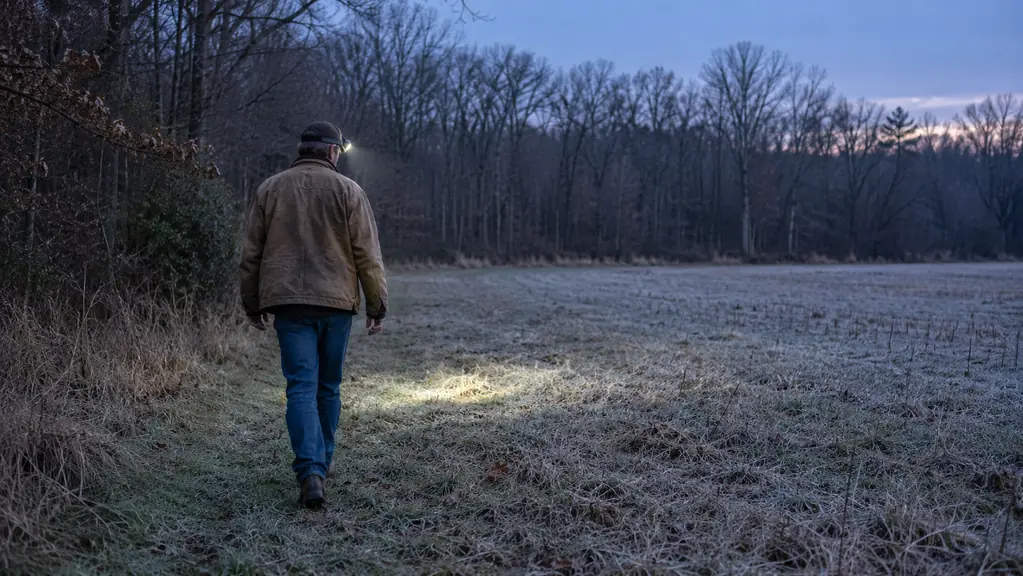
The walk from the gate to my ladder stand is fifteen minutes through a bean field and into hardwoods, and in November that walk starts in full dark. I keep the LHKNL low for it. High white light in the woods at five in the morning wrecks your eyes for the first half hour of daylight and announces you to every set of ears in the bottom. Low is enough to see a root and a fence wire. I switch it on at the gate and it stays on until I am in the stand with the harness on, then it comes off and goes in my jacket.
The second job is the boat ramp on Lake Barkley. My jon boat is fourteen feet and I launch before light most of the fall, and a ramp in the dark is a place where you want both hands free and your eyes on the trailer. That lamp has lit the trailer tongue, the winch strap and the drain plug more times than I can count. It is water resistant, not waterproof, so I do not dunk it. I have worn it in rain and in fog and it kept working. I have not tested it underwater and neither should you.
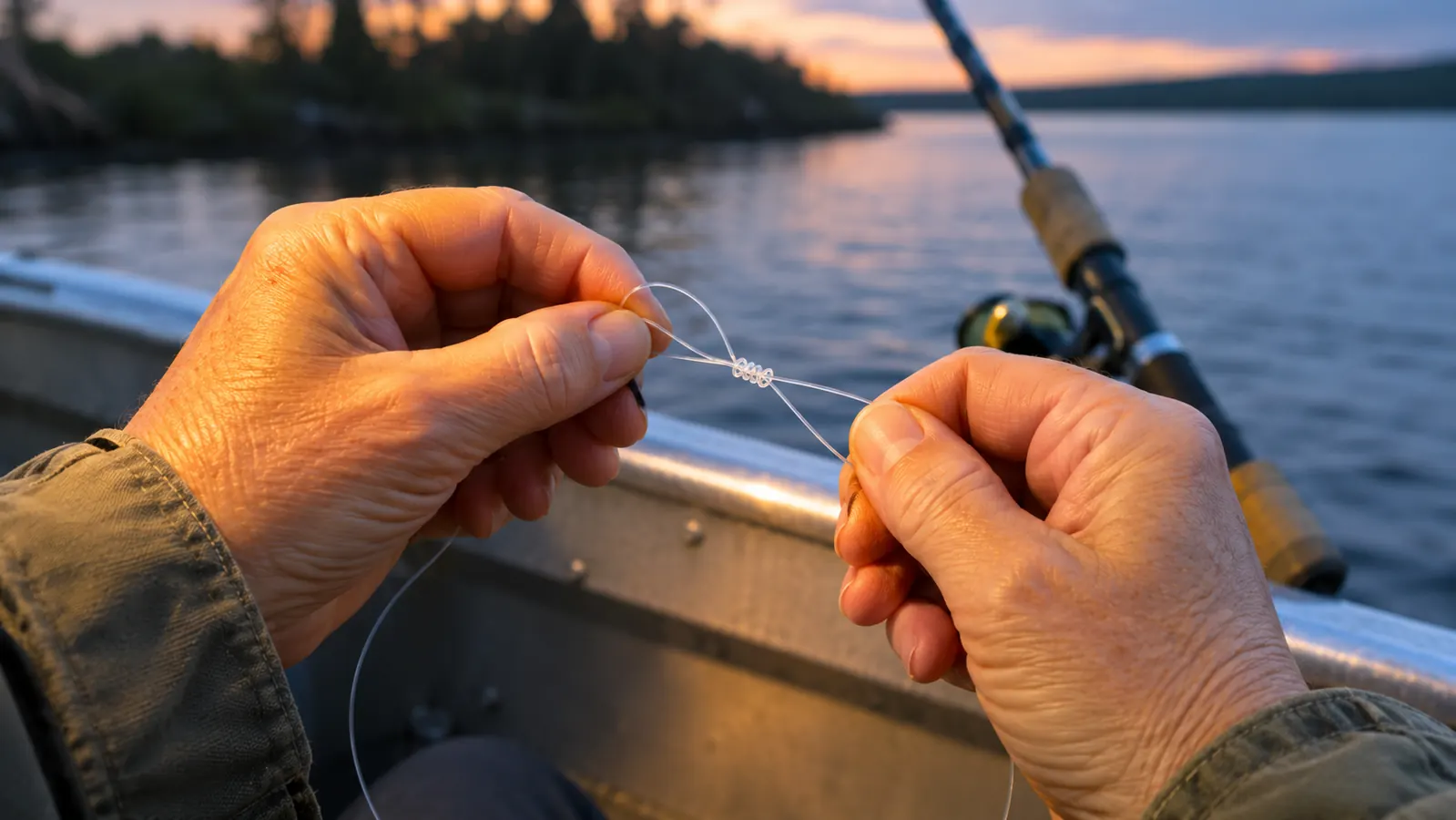
The third job is knots after dark, and this is where a headlamp earns its keep over any handheld. Retie a jig at the back of a boat with a flashlight in your teeth and you will lose a fish and your temper. With the lamp on, I have retied in wind with cold hands and it took what it took. The lamp head tilts down, and that is the whole reason it works for this. I do not have to bend my neck like a turtle to put light where my hands are.
Brightness: What 1200 Lumens Actually Looks Like
The white brightness is rated 1200 lumens. I believe the number is in the neighborhood, with the usual caveat that the top setting is a burst and not a setting you live in. On high, the beam picks up the gate post at 96 yards from my stand, though I would not call it a searchlight and I would not use it that way. High is for a short look. What was that. Is that the fence post or a stump. It is not for walking and it is not for sitting.
On low, which is what I actually use, you get a soft pool of light out to maybe fifteen or twenty yards. Plenty for a dark walk and easy on your night vision. The middle setting is what I use at the ramp and for knots. Those two are the ones I live in. Lights with a dozen settings and a strobe are more trouble than they are worth in the field, because the mode you need is never the one that comes up first, and this lamp at least lets you hold the button to get out of everything at once.
Here is my real complaint on brightness. The light is a hotspot. It is bright in the middle and falls off at the edges, so when you are looking at a knot you keep shifting your head to hold the knot in the center of the beam. A wider, softer flood would suit close work better. I have gotten used to it and I still notice it every single time I tie on a jig in the dark. That is the kind of thing a listing page cannot tell you and a two-year owner can.
The high setting is for a short look, not for living in. Low is what I actually use, and low is what the walk to the stand actually needs.
Battery: 1500mAh in Cold and Wet
The listing says you can charge it and run it at the same time, and that is true. What the LHKNL does better than I expected is exactly that. I have done it on the kitchen counter with the lamp propped on a coffee cup, which is not elegant but works. What it means in practice is that a lamp you forgot to charge is not dead for the morning. You plug it in on the drive out and it runs while it charges. That has saved one opening morning for me. One. But I remember it.
Cold is the honest test for any battery, and I hunt in November when the mornings run below freezing. I have not had this lamp quit in the cold. It does run noticeably shorter on the highest setting when the temperature drops, which is what every lithium cell does and not a knock on this one. What I do is charge both lamps the week before the season, and I do not leave one in the truck all winter expecting a full cell come January.
Charging is USB-C and there are two cables in the box, one per lamp. That sounds like a small courtesy and it is actually the thing that keeps the spare usable, because a spare with no cable is a paperweight. There is no wall block included. You will use one you already own, which is normal now and still worth knowing before you open the box. From dead, a full charge takes a couple of hours on my counter. I plug it in after supper and it is done before bed.
What I Liked
- Two lamps and two USB-C cables in the box, so the spare is genuinely usable
- Hold the mode button about three seconds to shut off from any setting
- 1.87 ounces, light enough to forget on a knit cap for a fifteen minute walk
- Built-in 1500mAh cell charges over USB-C and runs while it charges
- Lamp head pivots about 60 degrees, which is what makes knot tying workable
- Water resistant in rain and fog on the lake
Where It Falls Short
- Center hotspot, so close work means shifting your head to follow the beam
- Built-in battery cannot be swapped, so the lamp ends when the cell does
- Top setting behaves like a burst, not something you can leave running
- No wall charging block in the box
- The second lamp comes whether or not you want a spare
Fit, Weight and the 60 Degree Pivot
It weighs 1.87 ounces, light enough that I forget it is on. I wear it over a knit cap in November and over a ball cap in the spring, and the band adjusts without needing three hands. I have a big head and a lot of hats and it has not slid down my forehead on the walk in. That is not a given. A lamp that creeps down gets shoved back up every fifty yards and ends up in a drawer, and I have buried better gear than this for less.
The lamp head pivots about 60 degrees, which reads like a marketing number and is actually the feature I would miss most. Walk with it flat, tilt it down for knots, tilt it back up for the trail. The pivot is tight enough to hold where I put it and it does not flop down while I am moving. Two years in, it still holds. That is a hinge doing its job, and after twenty years of looking at the work of other people's hands, I notice when a hinge does not.
The lamp body measures about 1.5 inches deep, 2.35 wide and 1.75 tall, so it sits on the forehead without hanging out over your nose. It is water resistant, which in my experience covers rain, fog and spray coming off the lake, not a dunking. I would not swim with it and I would not leave it out in a downpour overnight. Treat it like a light and it will last. Treat it like a boat bumper and it will not.
How It Has Held Up Over Two Years
Two years of falls, cold, rain and one long stretch where the spare lived in the truck through a whole summer. The band has stretched a little and it still adjusts. The shell picked up a scuff on one corner from the boat seat and has no crack in it. The lens has a fine haze that I can see with the light off and cannot see with it on. The mode button still clicks and still needs the three-second hold to shut off, which I have come to prefer to clicking through settings.
The honest weak spot over time is the charging port, as it is on anything with a rubber flap over it. I have kept the flap closed and kept the port dry, and it still seats a cable firmly. Charge it on a counter, not in a wet boat, and put the flap back when you are done. That is the entire maintenance routine. I would give the same advice about any rechargeable light, and I have watched enough people skip it to know how it ends.
What has not happened matters too. It has not quit in the middle of a dark walk. It has not cooked the cell by sitting on the charger overnight. It has not drained itself sitting in a drawer, which is more than I can say for other rechargeable things in this house. Those are not exciting claims. They are the claims that decide whether a two-year-old lamp goes in the jacket again in November. I would buy the LHKNL two-pack again, and I would buy it for the same reason I bought it the first time, which is that it does the plain job and does not ask to be thought about.
Who This Is For
This is for the person who wants light on their head and both hands free for the walk in, the ramp and the knots, and who does not want to think about it again afterward. It suits a hunter walking a known path in the dark, an angler launching a small boat before daylight, and anybody who has ever held a flashlight in their teeth and regretted it. If what you want is a spare that lives in the truck already charged, the two-pack is the honest reason to pick this specific lamp over a single.
Who Should Skip It
Skip it if you need a wide, even flood for close work, because of that center hotspot. Skip it if you want to carry spare cells into the backcountry, because the battery is built in and cannot be swapped on a cold morning. Skip it if you need a light you can drop in the lake and fish back out, because water resistant is not waterproof and I will not pretend otherwise. And if you already own a headlamp you trust, nothing here is different enough to justify replacing it.
If you want both hands back on the walk in, this is the lamp on my shelf
Two years, one honest hotspot, no failures. Confirm the current price and check that the listing still ships both lamps with both USB-C cables, because the spare is the half that earns its keep.
Amazon Check Today's Price on Amazon →