
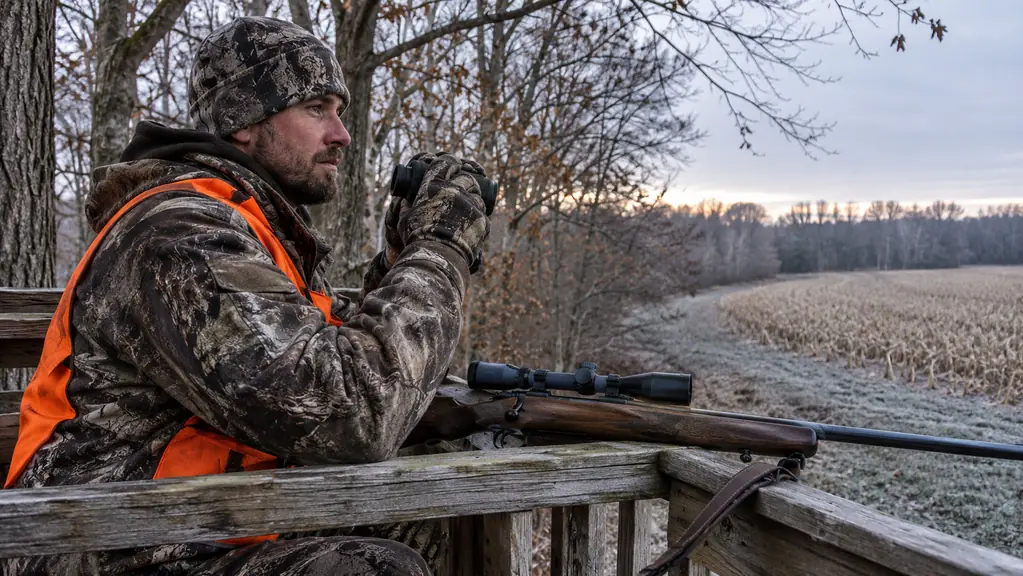
The doe came out near the far fence in November 2024. I guessed her at 150 yards, touched one off, and missed clean. She went back into the hardwoods unhurt. That is the whole story, and on its own it is not much of one.
What bothered me was not the miss. It was the guessing. I had been hunting that ground since I was twelve, and I had spent all those years telling myself I could pace a distance with my eye and be close enough. Close enough is a fine thing to believe right up until you find out what it actually means.
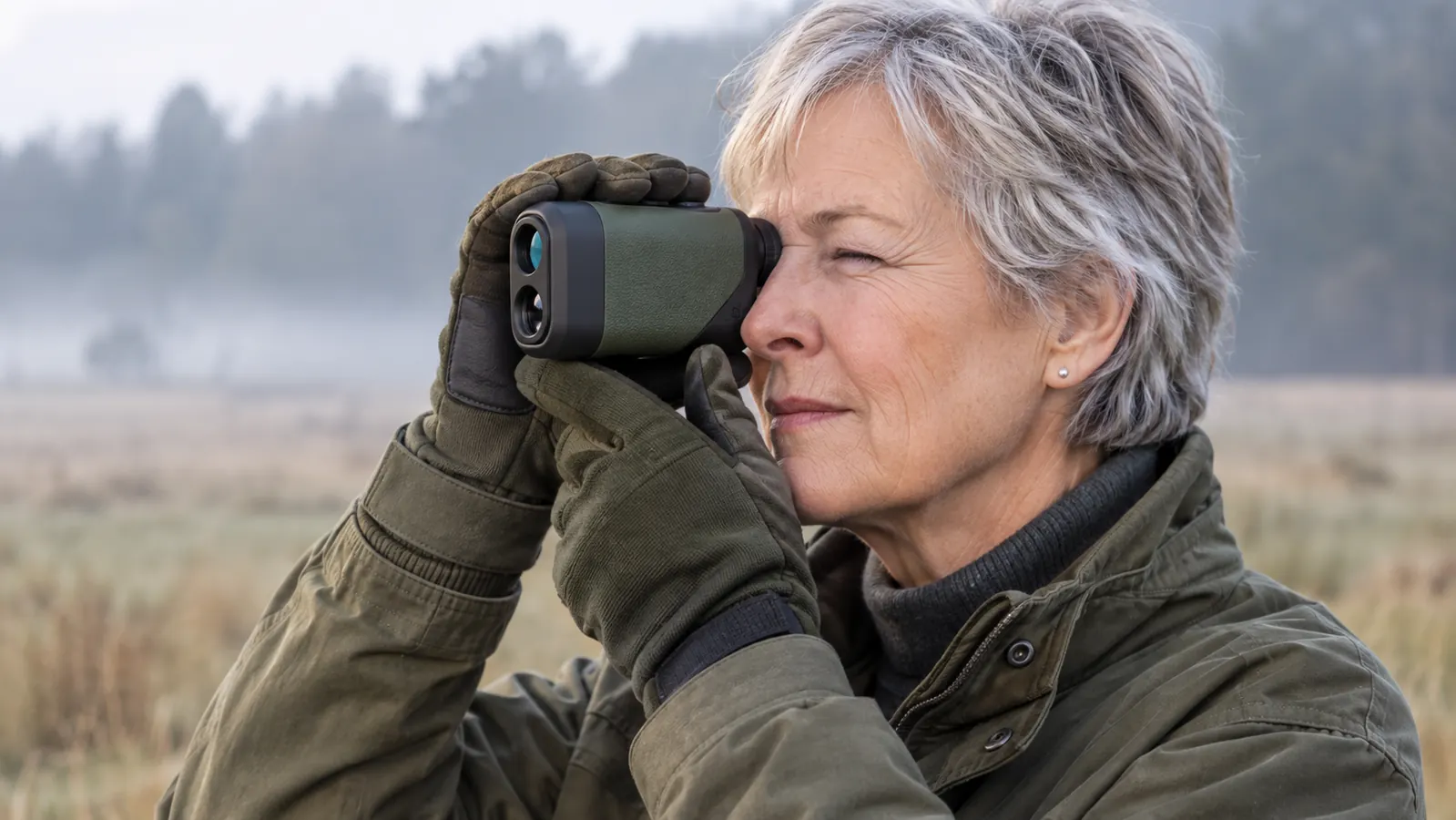
My dad took me out from age twelve, so I have hunted and fished close to 50 years, and until December 2024 I never owned a rangefinder.
That December I bought a TIDEWE hunting rangefinder, the rechargeable one that comes with a case, and it has ridden in my jacket chest pocket ever since. I did not buy it to shoot farther. I bought it to find out what I had actually been looking at.
I spent twenty years running a taxidermy shop out of a converted garage, and that work taught me to look at how a thing is built before I trust it. A rangefinder is a small plastic box with a lens and a battery in it. There is not much to one, which is exactly why I wanted to see whether the little that is there was done right.
The first morning I had it, I climbed into the ladder stand before light and ranged the three marks I use. The near oak came back 48 yards. The gate post came back 96. The far fence, the one that cost me the doe, came back 212. I had been calling that fence 150 for most of a decade.
The far fence, the one that cost me the doe, came back 212 yards. I had been calling that fence 150 for most of a decade.
Range your ground before you need the number
The TIDEWE rangefinder reads 3 to 700 yards, accurate within a yard, and weighs 5.67 ounces. It is the one in my jacket pocket.
Amazon Check Today's Price on Amazon →What it does is simple and I will not dress it up. Six power magnification, 3 to 700 yards, accurate within a yard. It reads straight-line, vertical and horizontal distance. It weighs 5.67 ounces and it is a touch over four inches long, so it disappears in a pocket and I forget it is there until I need it.
It is rated IP54, which means water resistant, not waterproof. I have had it out in cold rain and it kept reading, but I do not leave it lying in the bottom of a boat and I would not. Between seasons it sits in its case on the gun cabinet shelf. It is rechargeable, so I am not hunting for batteries in November.
There is a speed function on it. I have never used it and I do not expect to. I am ranging fence posts and oak trees, not moving targets.
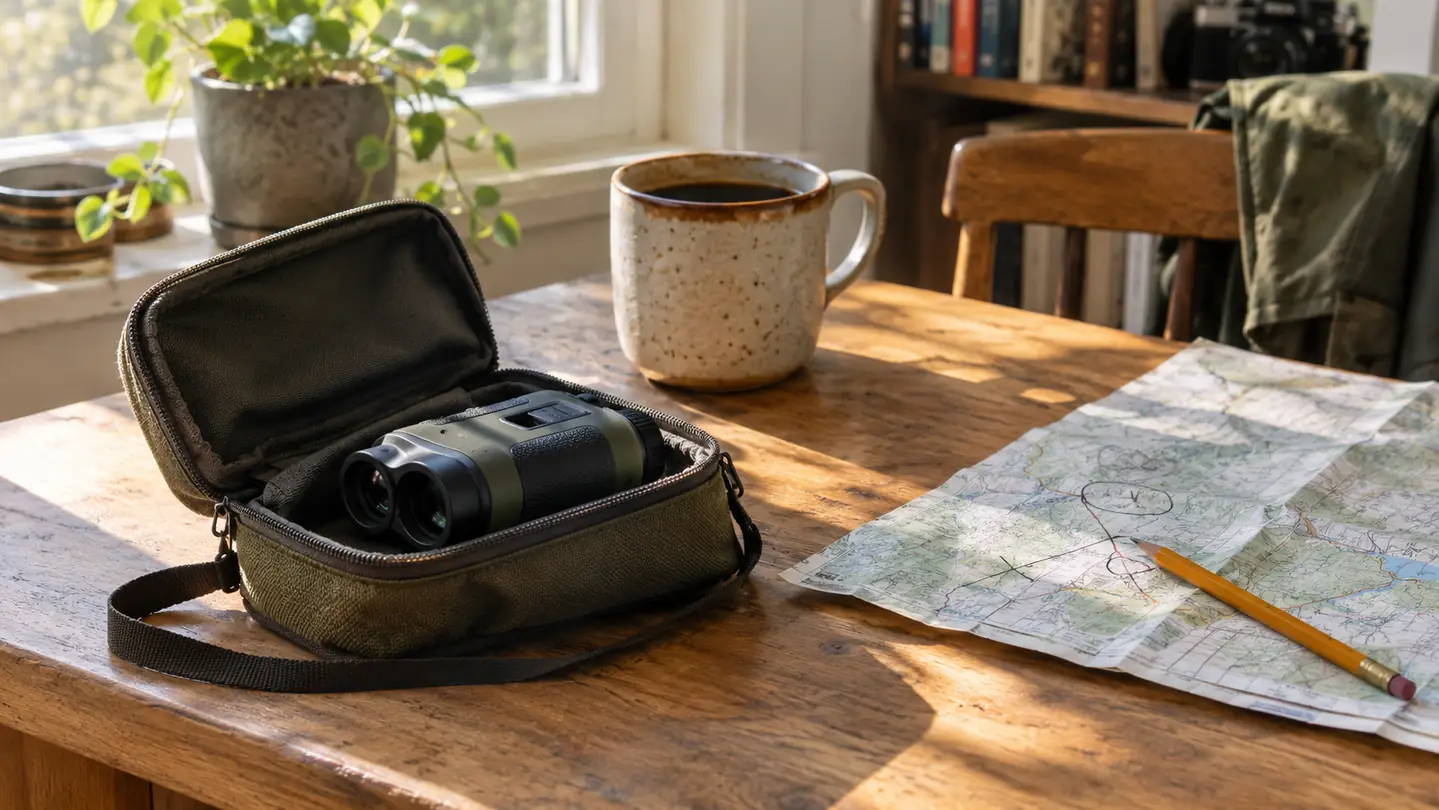
Here is the honest part. The rangefinder did not make me a better shot. What it did was end an argument I had been having with myself for years. I still have to hold still, and I still keep my own limit at 150 yards from that stand. What changed is that now I know which deer are inside that limit before I ever put the rifle up.
Last November I took a doe at the gate post, 96 yards. Rangefinder first, then the rifle. That is the first deer I have killed where the distance was a number I knew instead of a number I felt.
I walk in from the gate in the dark, about fifteen minutes, and I range the three marks once I am settled and the stand has quit moving. It takes under a minute. Then it goes back in my pocket and I leave it alone until something shows.
Twice last season I watched deer work the edge of that far fence and let them go. 212 yards is not a shot I take, and now I know that before I start talking myself into it.
A friend at the boat ramp carries a Bushnell Bone Collector and speaks well of it. I have never owned one, so I am not going to pretend I can compare the two. I bought the TIDEWE because it was rechargeable and had more range than I will ever use, and I have not had a reason to second-guess it.
The complaints are small but they are real. It is plastic and it feels like plastic. The case is plain and does nothing special. With heavy gloves on, the button takes a firm press. In flat gray light at first shooting hours the readout is dimmer than I would like. None of that has cost me a deer.
What I'd Tell You If We Were Sitting at My Kitchen Table
I would tell you a rangefinder is not gear, it is arithmetic you can trust, and that plenty of people do not need one. If you hunt ground you already know and every shot you take is inside a hundred yards, keep your money and keep guessing. But if you have a fence line or a treeline out there you have been calling one number for years without ever measuring it, go measure it before November. I bought the TIDEWE rangefinder myself, I have had it nearly two years, and it has done the one job I asked of it without any fuss.
And check your own state's rules on shooting hours before you take anybody's word for anything, mine included.
Measure your ground once and stop guessing
One small case on the shelf, one number you can trust before daylight. Mine has read the same three marks for two seasons.
Amazon Check Today's Price on Amazon →